As an Amazon Associate, we earn from qualifying purchases. Some links on this site are affiliate links at no extra cost to you. Our recommendations are based on thorough research and editorial judgment.


Cordless Runtime, Charging Time, and Battery Types: What Users Should Know

Cordless tools utilize various battery types, such as Lithium-Ion (Li-ion), Nickel-Cadmium (NiCd), and Nickel-Metal Hydride (NiMH). Li-ion batteries charge quickly, typically within 30 to 60 minutes, and carry a runtime of 20-40 minutes. NiCd is heavier and has a longer charge time, while NiMH offers better energy density compared to NiCd. Understanding these aspects, including battery capacity and voltage ratings, enhances users’ experience and performance. Further insights can improve informed decisions on battery usage.
Key Takeaways
- Cordless tools typically use Lithium-Ion (Li-ion), Nickel-Cadmium (NiCd), or Nickel-Metal Hydride (NiMH) batteries, each with distinct characteristics.
- Li-ion batteries charge quickly (30-60 mins) and offer longer runtimes, around 20-40 minutes, depending on capacity.
- NiCd batteries are durable but suffer from memory effect, whereas NiMH offers better energy density and less toxicity.
- Proper battery care includes using the original charger, avoiding overcharging, and maintaining a 50% charge for Li-ion when not in use.
- Disposal of batteries must follow regulations, utilizing recycling programs to prevent environmental hazards from hazardous materials like cadmium.
Common Battery Types for Cordless Tools
There are three common battery types used for cordless tools: Lithium-Ion (Li-ion), Nickel-Cadmium (NiCd), and Nickel-Metal Hydride (NiMH). Lithium-Ion batteries are known for being lightweight and fast to charge, typically taking just 30 to 60 minutes. They do not suffer from memory effect, retaining their charge during storage with a self-discharge rate of around 5% per month. Conversely, Nickel-Cadmium batteries are heavier and durable, able to endure deep discharges, but they experience memory effect and pose environmental concerns due to their cadmium content. Nickel-Metal Hydride batteries provide better energy density than NiCd batteries and are less toxic, though their charging time varies between 1 to 3 hours and performance can decline in extreme temperatures. Many affordable vacuum cleaners utilize these battery types to offer budget-friendly options without sacrificing performance.
Key Features to Consider When Choosing Batteries
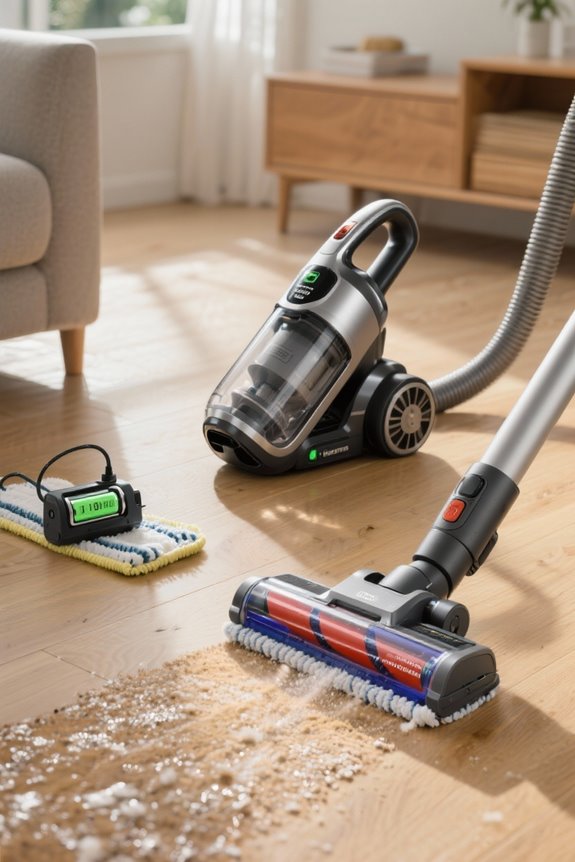
When choosing batteries for cordless tools, several key features warrant careful consideration to guarantee adequate performance and runtime. Battery capacity, measured in amp-hours (Ah), is essential; higher capacity batteries deliver extended operating times, making them suitable for demanding tasks. Additionally, the battery type influences both charging time and overall power output; Lithium-Ion batteries typically charge within 30 to 60 minutes, while Nickel-Cadmium and Nickel-Metal Hydride batteries may need longer. Voltage ratings also play a significant role; tools designed for higher voltage batteries can effectively handle tougher jobs. Finally, the compatibility with the charger is important, ensuring ideal performance and longevity. These factors collectively guide users in making informed decisions when selecting batteries for their cordless tools.
Battery Performance and Maintenance Tips

Battery performance and maintenance greatly impact the longevity and effectiveness of cordless tools. Proper care can enhance battery life, guaranteeing maximum operation. Users should utilize the original charger and unplug after a full charge to prevent overcharging, which negatively affects performance. Lithium-ion batteries typically feature a runtime of 20-40 minutes, with higher capacity levels measured in amp-hours directly influencing operation time. Storing lithium-ion batteries at around 50% charge considerably aids in maintaining battery health. In contrast, Nickel-Cadmium and Nickel-Metal Hydride batteries can be stored fully charged. Regular inspections for damage or signs of decreased charging efficiency or runtime are essential. Dual-battery vacuums provide up to 120 minutes of runtime, which is ideal for extended cleaning sessions. Adhering to these maintenance tips will secure peak battery performance for cordless tools throughout their lifespan.
Safe Battery Use and Handling
Proper handling and use of batteries are vital for ensuring safety and optimizing performance. Users should always use the manufacturer’s specified charger for Proper Charging, as this prevents overheating and prolongs battery life. To maintain battery health, it is advisable to avoid fully draining lithium-ion batteries; they should be recharged before dropping below 20%. Long-term storage should occur in a cool, dry place, ideally keeping batteries at about 50% charge. Regular inspections for physical damage, including bulging or leaks, are important for preventing safety hazards during use. Additionally, users must never mix different brands or types of batteries in chargers, as this practice can lead to overheating and compromise reliable performance, endangering both the user and the device. For those seeking vacuums with strong suction power, models like the Aspiron Bagless Canister Vacuum Cleaner offer over 30Kpa, ensuring effective cleaning performance.
Disposal and Recycling Practices
Ensuring proper disposal and recycling practices for batteries is crucial, as improper handling can lead to environmental hazards. Users should never dispose of batteries in household trash, as they can leak hazardous materials toxic to the environment. Instead, it is recommended to utilize designated recycling programs for battery disposal. Prior to transporting batteries, individuals should tape or insulate the terminals to prevent short circuits. Storing spent batteries in a labeled container helps minimize risks associated with leakage or corrosion. Following local laws regarding hazardous waste is essential, especially for batteries containing cadmium or other hazardous materials. Many retailers and waste management facilities offer reliable battery recycling services, thereby facilitating responsible disposal of used batteries while promoting environmental safety. Regular filter maintenance is required for optimal performance, as models should emphasize allergen reduction for better air quality.
Factors Affecting Cordless Runtime
The performance of cordless tools regarding runtime is impacted by several key factors, which should be understood to maximize utility. Primarily, battery capacity, measured in amp-hours (Ah), plays a significant role; a higher capacity results in longer runtime. Additionally, usage intensity affects runtime, as cutting through harder materials rapidly depletes battery power compared to softer ones. Moreover, chain sharpness is critical, with dull chains consuming more energy and shortening runtime. The type of motor also matters; brushless motors typically offer higher energy efficiency than brushed motors, extending runtime. Finally, environmental factors, such as temperature extremes, can drastically affect battery performance, leading to reduced efficiency and shorter operational times in challenging conditions. Additionally, models like the Cordless 600W Stick Vacuum offer impressive runtimes of up to 70 minutes per charge, showcasing advancements in battery technology and efficiency in modern cordless vacuum cleaners.
Understanding Battery Charging Profiles
When considering battery charging profiles, it is essential to recognize that various battery types employ distinct charging methods that directly impact performance and longevity. Lithium batteries utilize a Constant Current Constant Voltage (CCCV) method, which efficiently manages charging as the battery approaches full capacity, often reaching about 70% charge in under an hour. In contrast, nickel-based batteries, such as NiCd and NiMH, rely on constant current charging while experiencing voltage fluctuations to indicate full saturation. Slow chargers might take 14-16 hours to charge without detection, while rapid chargers can complete their tasks in 3-6 hours. Smart chargers enhance safety by incorporating temperature sensors and plateau timers, which monitor heat and adjust the current, thereby preventing overheating and extending battery chemistry effectiveness. A driveway vacuum cleaner with HEPA filters helps improve air quality while cleaning outdoor spaces.
The Importance of Battery Chargers
Battery chargers play an important role in ensuring ideal performance and lifespan of rechargeable batteries, as their design and compatibility greatly influence charging efficiency. Using the correct battery charger can prevent performance issues or potential damage to the battery. Various chargers, such as personal, industrial, and smart chargers, address different charging needs, maximizing peak performance for specific types of batteries. It is essential to utilize manufacturer-approved chargers to mitigate safety risks, including overheating or battery failure. Advanced smart chargers employ technology to revive over-discharged batteries and monitor charging progress in real time. Proper charging methods, significantly the Constant Current Constant Voltage (CCCV) technique, are vital for lithium-ion batteries, helping to preserve battery health and prevent degradation over time. Many battery-powered options for leaf vacuum cleaners offer longer operational times, making them ideal for eco-friendly use.
Enhancing User Experience With Battery Knowledge
Knowledge of battery characteristics greatly enhances the overall user experience with cordless tools, allowing individuals to make informed choices based on performance criteria. Understanding various battery types like Lithium-Ion and Nickel-Cadmium can greatly impact battery efficiency and runtime expectations. Lithium-Ion batteries, recognized for their lightweight design, offer charge times of just 30 to 60 minutes, improving user convenience considerably. Their capacity, measured in amp-hours (Ah), correlates directly to runtime; for example, a high-capacity 24V 10Ah lithium battery typically provides about one hour of operation under a 10A load. Proper storage techniques, such as maintaining lithium-ion batteries at 50% charge during inactivity, also extend battery life. Regular maintenance practices further enhance overall performance and user satisfaction with cordless tools. Many cordless vacuums and mops feature self-cleaning technology that promotes hygiene and efficiency during use, contributing to a better and more satisfying user experience.
Frequently Asked Questions
What Is the 80 20 Rule for Charging Batteries?
The 80/20 rule for charging batteries advocates charging to 80% capacity, promoting battery maintenance tips and charging efficiency strategies. This approach aids in battery lifespan extension, ensuring ideal performance while minimizing wear and heat generation over time.
What Are the Three Common Types of Portable Rechargeable Batteries?
The three common types of portable rechargeable batteries are Lithium Ion, known for their lightweight and fast charging; Nickel Cadmium, which are durable but heavy; and Lead Acid, often utilized for larger applications despite their weight.
What Is the 20 to 90 Battery Rule?
The 20 to 90 battery rule emphasizes battery maintenance tips by encouraging ideal charging practices, suggesting users charge lithium-ion batteries between 20% and 90% for enhanced battery lifespan management and reliable performance.
What Is the 40 80 Rule for Batteries?
The 40 80 Rule promotes battery longevity by suggesting users maintain a charge level between 40% and 80%. This practice enhances charge cycles and improves power management, ultimately extending the lifespan of lithium-ion batteries.
Conclusion
In conclusion, understanding the intricacies of cordless tool batteries enhances user efficiency and extends tool longevity. By familiarizing oneself with the various battery types, charging profiles, and runtime factors, users can make informed decisions that align with their needs. Furthermore, adhering to proper handling and disposal practices guarantees safety and environmental responsibility. Ultimately, this knowledge empowers users to optimize their experience, maximizing both performance and satisfaction in their cordless tool applications.


