As an Amazon Associate, we earn from qualifying purchases. Some links on this site are affiliate links at no extra cost to you. Our recommendations are based on thorough research and editorial judgment.


Using Vacuum Attachments the Right Way: Crevice Tools, Dusting Brushes, and More

Using vacuum attachments correctly enhances cleaning efficiency and effectiveness. Crevice tools access tight spaces, while dusting brushes clean delicate surfaces without scratching. Upholstery tools are tailored for furniture but should not be used on delicate fabrics. Regular maintenance, including washing and inspecting attachments, prolongs their life. When storing, keep them organized and dry to prevent damage. Maintaining compatibility with your vacuum model is essential. More insights on maximizing attachment use and maintenance can further enhance cleaning results.
Key Takeaways
- Use a crevice tool for tight spaces and corners, ensuring slow movement for effective dust collection and avoiding delicate fabrics to prevent scratches.
- Employ a dusting brush on delicate surfaces like lampshades and curtains to prevent damage while effectively capturing dust.
- Regularly clean the upholstery tool’s roller to maintain its performance, especially for pet hair removal, and avoid using it on delicate fabrics.
- Inspect and clean attachments regularly to prevent debris buildup and ensure optimal performance, replacing worn brushes and filters as needed.
- Store attachments in a dry, organized manner to prevent damage and ensure compatibility with your vacuum model.
Understanding the Importance of Vacuum Attachments
When considering home cleaning solutions, understanding the importance of vacuum attachments can be pivotal for achieving ideal results. Vacuum attachments, including crevice tools and dusting brushes, enhance a vacuum’s versatility, making it suitable for various cleaning surfaces. Each specialized tool serves specific cleaning tasks; crevice tools effectively access tight corners and baseboards, while dusting brushes gently remove dust from delicate items. Using appropriate vacuum attachments leads to improved cleaning results, reducing the need for multiple tools and minimizing dust and allergens. Regular maintenance, such as cleaning and timely replacement of attachments, is essential to sustain their effectiveness. Investing in these specialized tools also greatly assists in challenges like pet hair removal, ensuring a thorough cleaning experience throughout the home. Additionally, regular maintenance of vacuum hoses is recommended to extend their lifespan and maintain efficiency.
How to Use the Crevice Tool Effectively
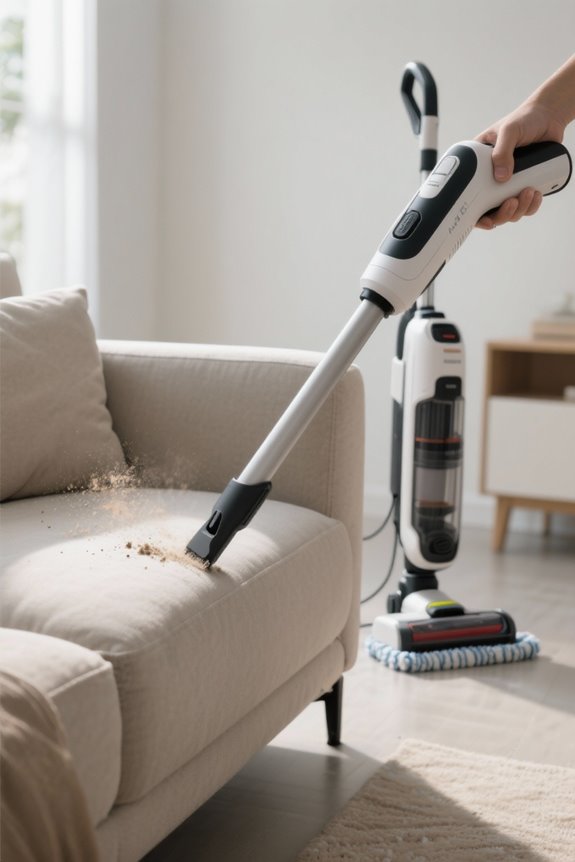
The crevice tool stands as an essential attachment for tackling tight spaces in home cleaning tasks. It is designed specifically to clean tight spaces, effectively reaching corners, baseboards, and nooks that standard vacuum heads cannot access. To match specific cleaning needs, various sizes of crevice tools are available, including longer nozzles for deep reaches and angled attachments for maneuvering corners. Regular care is important; cleaning the crevice tool after use helps remove crumbs and debris, ensuring peak suction. Additionally, it is vital to check that the tool is securely attached to the vacuum, which maximizes suction power. For best results, using the crevice tool slowly allows it to collect dust and debris from tight spaces efficiently, ensuring thorough cleaning. When selecting a vacuum cleaner, consider the filtration system that efficiently captures dust particles, which is crucial for maintaining clean air as mentioned in our comprehensive review.
Recommended Products

[Stretch Universal Connector] PetOde dryer lint vacuum cleaner attachment is designed with a premium elasticated stretch universal connector that can be connected to most vacuum cleaners! Say goodbye to the worry of purchasing incompatible attachment models

This unique vacuum crevice tool is designed with flexibility that provides side-to-side agility in tight areas, unlike most wet dry vacuum crevice tools that are hard and rigid
The Benefits of a Dusting Brush
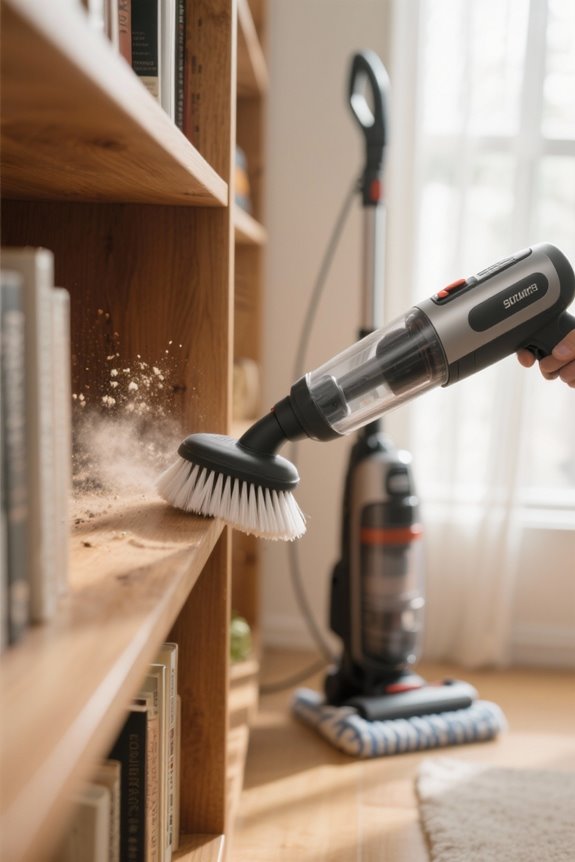
Dusting brushes offer an effective solution for maintaining cleanliness across various surfaces while prioritizing care for delicate items. Equipped with soft bristles, the dusting brush gently removes dust and debris, making it suitable for cleaning surfaces such as lampshades, curtains, and electronics. Routine use of this tool considerably enhances air quality by capturing dust particles that can lead to allergies or respiratory problems. Its versatility allows it to tackle multiple surfaces, including furniture, shelves, and baseboards, ensuring thorough cleaning throughout the home. Additionally, many dusting brushes easily attach to standard vacuum hoses, optimizing the vacuum cleaner’s performance. By preventing dust buildup, a dusting brush reduces the need for frequent deep cleaning, thereby promoting an efficient and effective cleaning routine. Adding a crevice tool to your cleaning arsenal can enhance cleaning effectiveness in hard-to-reach areas, ensuring thorough maintenance of your home environment.
Recommended Products

Round dusting brush made of soft natural bristle and plastic material, good quality.

Rich Package: The chaseroad 3PCS Horse Hair Brush shop vac accessories set, which includes 2 durable and scratch-resistant brushes, 1 vacuum adapter (1 1/4″ to 1 3/8″). Our round brush attachment works on a variety of surfaces, making it easy to keep your home clean and as convenient as possible.

𝐂𝐥𝐞𝐚𝐧𝐢𝐧𝐠 𝐓𝐢𝐠𝐡𝐭 𝐒𝐩𝐚𝐜𝐞𝐬: This vacuum brush is perfect for everyday home cleaning. It is especially suitable for cleaning nooks and crannies and places that are difficult to reach, making your cleaning easy
Choosing the Right Upholstery Tool for Your Furniture
Selecting the appropriate upholstery tool for a home’s furniture can greatly impact cleaning efficiency and fabric care. Upholstery tools typically feature a flat, wide design paired with a fabric strip that effectively cleans sofas, chairs, and mattresses while protecting against damage. Users should avoid these tools on delicate fabrics or items with loose threads, as they may incur damage. Regular cleaning of the tool’s roller enhances cleaning performance and prevents clogging. Some upholstery tools include lint-catching strips which considerably aid in removing pet hair and other debris from fabric surfaces. For detailed cleaning in hard-to-reach areas, utilizing a crevice tool is recommended, as it targets specific gaps like couch cushions and guarantees a thorough clean. Many bagged vacuum cleaners feature HEPA filters, making them ideal for allergy and asthma sufferers.
Recommended Products
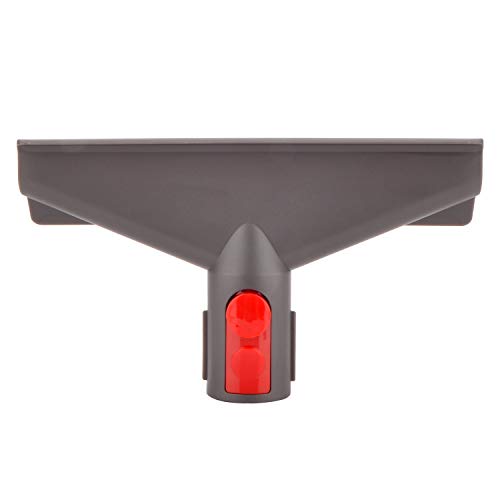
Compatible with Dyson Cordless Stick and Handheld Vacuum Cleaners: Works with Dyson GEN5, V15, V15s, V12, V11, V10, V9, V8, V7, and many more models including SV10, SV11, SV12, SV14, SV15, SV16, SV18, SV27, SV28, SV29,Compatible with Detect,Submarine,Outsize,Slim,Absolute,Cyclone,Torque Drive,and more

Package: This dust cleaning attachment kit includes 10 pieces: 1* 1 1/4inch turbo brush, 5* 1 1/4inch dust vacuum attachments and adapters in a variety of sizes so they can be compatible with most vacuum cleaners (NOT ALL). Adapters combination give you more options for your vacuum cleaner. Please consider diameter of adapters and check the inner/outer diameter of your vacuum hose before ordering to make sure these adapters can fit with your vacuum hose.
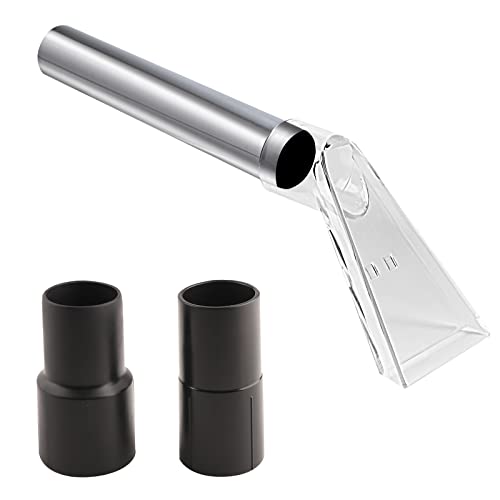
EXTRACTOR ATTACHMENT: This tool turns any wet/dry vacuum cleaner and shop vac into a powerful extractor. Has the ability to remove dirt and dirty water. Easy to install and reusable.
Maximizing Reach With an Extension Wand
Maximizing reach when using a vacuum is essential for thorough cleaning in hard-to-access areas. An extension wand effectively increases the vacuum’s ability to clean high ceilings, tackle cobwebs in corners, and reach behind appliances without relying on ladders. This versatile accessory is beneficial for cleaning hard-to-reach areas, such as ceiling fans and tall bookshelves. By pairing the extension wand with appropriate attachments, like a crevice tool or upholstery brush, users can enhance cleaning effectiveness across different surfaces. However, one must handle the extension wand carefully during maneuvering, as its length can make it somewhat challenging in tight spaces. Proper use of this tool greatly improves overall vacuuming efficiency and guarantees that every corner of a home receives proper attention. Regular lint removal improves dryer efficiency and reduces operational costs by enhancing functionality, while also minimizing the risk of dryer fires.
Specialty Attachments for Unique Cleaning Needs
Specialty attachments serve targeted cleaning purposes, enhancing the vacuum’s performance for unique challenges that standard tools may not address effectively. Crevice tools, with their long, narrow design, excel at reaching tight spaces, corners, and gaps, greatly improving overall cleanliness in hard-to-reach areas. Dusting brushes, equipped with soft bristles, are ideal for gently cleaning delicate surfaces, such as lampshades, curtains, and electronics, without causing scratches or damage. Utilizing these specialty attachments boosts cleaning efficiency through targeted dust removal, which aids in improving air quality and reducing allergens in the home. Regular maintenance, including cleaning after each use and replacing worn parts, is essential for ensuring their continued effectiveness and prolonging the lifespan of these specialized vacuum attachments. Handheld vacuums, known for their lightweight and portable designs, often come with these attachments to enhance their versatility and effectiveness in cleaning various surfaces.
Common Mistakes to Avoid When Using Attachments
Many users overlook vital aspects of vacuum attachments, which can hinder effective cleaning. For instance, neglecting to clean vacuum attachments and accessories before use can spread dirt around instead of removing it. Additionally, using crevice tools on delicate fabrics can scratch surfaces, so they should be reserved for hard-to-reach areas. Moreover, opting for incompatible attachments can lead to suboptimal performance, particularly when specific surfaces require specialized tools. The upholstery tool’s roller often requires maintenance to avoid clogging, which can reduce suction effectiveness over time. Finally, using the wrong attachment type on delicate fabrics or surfaces can result in irreparable damage, making it essential to choose appropriate tools and guarantee compatibility for different cleaning tasks, especially when removing pet hair. When choosing a vacuum, it’s important to consider multi-surface cleaning versatility to ensure effective performance across different flooring types.
Maintenance Tips for Your Vacuum Attachments
Effective maintenance of vacuum attachments is crucial for guaranteeing long-lasting performance and efficient cleaning. Regularly checking vacuum attachments for debris and tangled hair post-use helps maintain peak suction. Washing washable attachments with warm water and mild detergent guarantees cleanliness, but they must be completely dry before reattaching. Monthly inspections are essential for detecting wear on bristles, seals, and connectors, preventing blockages during cleaning. Replacing worn brushes every 6 to 12 months and HEPA filters every 6 months is significant for maintaining efficiency and air quality. Proper storage of attachments in a dry location safeguards against damage and guarantees compatibility. By following these maintenance tips, users can extend the life of dusting brushes and crevice tools, enhancing their vacuum’s performance. For those with pet hair concerns, motorized brush tools are especially effective in lifting embedded dirt and hair, ensuring optimal cleaning results.
Frequently Asked Questions
Which Comes First, Vacuuming or Dusting?
Dusting should be performed before vacuuming to efficiently manage dust accumulation. Following this cleaning order enhances effectiveness, improves air quality, and addresses allergy concerns, while optimizing vacuuming techniques and dusting methods in chore schedules.
When to Use Brush Attachment on Vacuum?
When tackling dusting delicate surfaces or upholstery cleaning, the brush attachment offers various benefits. Employ proper brush technique for effective vacuuming strategies, maximizing pet hair removal and allergen reduction across multi-surface applications and hard floors alike.
What Is the Difference Between Crevice and Dusting Tools?
The crevice tool excels in cleaning small spaces by effectively removing dirt and allergens, while the dusting brush focuses on delicate surfaces for effective dust removal. Different vacuum attachment types enhance cleaning versatility and efficiency throughout the home.
How to Vacuum Crevices?
Vacuuming crevices might seem futile, but precision cleaning reveals hidden dust in narrow spaces. Effective vacuum techniques, particularly with attachments, guarantee maximum upholstery maintenance and enhance cleaning efficiency, especially in car interiors, elevating home organization effortlessly.
Conclusion
In conclusion, utilizing vacuum attachments effectively enhances cleaning efficacy and efficiency. By properly deploying tools like crevice tools, dusting brushes, and extension wands, users can achieve thorough cleanliness in diverse environments. Regularly addressing common mistakes and conducting maintenance guarantees longevity and performance. Prioritizing a practical approach leads to exceptional results while maintaining a tidy space. Ultimately, thoughtful usage of these specialized tools fosters a cleaner, healthier living environment, maximizing their multifaceted potential for everyday cleaning tasks.


