As an Amazon Associate, we earn from qualifying purchases. Some links on this site are affiliate links at no extra cost to you. Our recommendations are based on thorough research and editorial judgment.


How to Train Kids to Use a Handheld Vacuum for Simple Chores

To train kids to use a handheld vacuum for simple chores, first choose a lightweight model with safety features, ensuring easy grip. Next, explore the vacuum together, demonstrating its on/off functions and various attachments. Instruct them on proper techniques, like vacuuming straight lines and checking for obstacles. Establish a routine by designating specific areas for cleaning and encourage self-assessment of their work. Knowledge of common issues can promote independence and maintenance, leading to cleaner surroundings. Further insights are available for enhancing the process.
Key Takeaways
- Choose a lightweight handheld vacuum with safety features to make it easy and safe for kids to handle during chores.
- Demonstrate the vacuum’s functions and engage kids in hands-on exploration to boost their confidence and understanding.
- Teach kids proper vacuuming techniques, including checking for obstacles and using efficient patterns for thorough cleaning.
- Set a regular vacuuming schedule and use a chore chart to create structure and track progress in completing their tasks.
- Encourage self-assessment and constructive feedback to help kids recognize their strengths and areas for improvement in handling the vacuum.
Choosing the Right Handheld Vacuum
When selecting a handheld vacuum for children, it is essential to prioritize features that enhance usability and safety. Lightweight models facilitate easy maneuverability, allowing children to operate the vacuum without excessive fatigue. Adjustable handles or comfortable grips support smaller hands, fostering independence during chores. Kid-friendly vacuums designed specifically for training incorporate safety mechanisms, ensuring a secure experience while promoting confidence. Clear dustbins or bags simplify the emptying process, making it easier for children to understand their role in maintaining cleanliness. Additionally, gradual introduction to the vacuum helps children become familiar with parts such as the power button and attachments. This approach not only promotes competence but also encourages a positive attitude towards household chores, establishing valuable skills for future responsibilities. Consider models with washable HEPA filters, which enhance air quality and hygiene while making maintenance straightforward and manageable for children.
Recommended Products

LEARN THROUGH PLAY: Explore endless imaginative play while developing coordination, sparking creativity, and enhancing core motor skills in every delightful sweep.

#1 Brand In Hand Vacuums* - Tackle messes big and small with convenient solutions that make cleaning easy by design

[Realistic Sound & Suction]: Designed with vacuum sounds and gentle suction for pretend play, our kids vacuum cleaner gives little ones a fun way to copy everyday cleaning. It encourages imagination, confidence, and the joy of helping around the house while keeping the focus on play.
Exploring the Vacuum Together
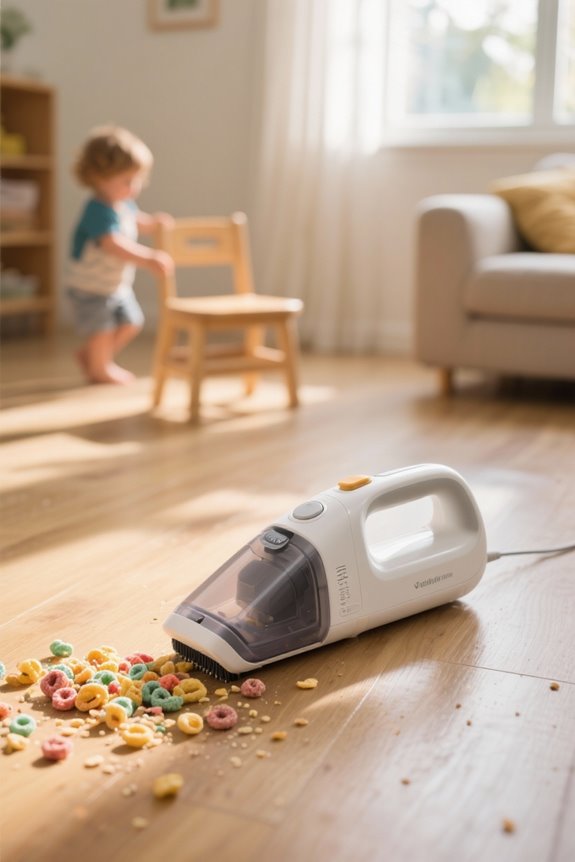
Exploring the handheld vacuum together allows children to gain confidence and familiarity with the device, which can facilitate their independence in completing chores. To enhance the learning experience, parents should choose lightweight models that are easy for kids to learn to maneuver. Allowing children to turn the vacuum on and off helps them understand its functionality. Encouraging questions fosters engagement, essential for successful training. It’s important to communicate how using the vacuum assists in keeping a clean and safe environment, reinforcing essential life skills. By actively involving kids, they learn the importance of putting away messes and maintaining order. Additionally, emphasizing the efficient storage solutions with wall mounts can teach children about organization and how to keep their tools accessible. Ultimately, this method provides valuable lessons while training our children in practical household tasks.
Recommended Products

Super Value kids Vacuum Toy Set - Push & Handheld Vacuum Cleaner Play House Pretend Toy Combination with an upgraded version of 64 EVA particles, satisfying two exciting ways of playing at one time so that children can double their happiness

[Super Value Vacuum Cleaner Toy Set] Push & Handheld Vacuum Cleaner Play House Pretend Toy Combination with an upgraded version of 64 EVA particles, satisfying two exciting ways of playing at one time so that children can double their happiness.

Demonstrating Basic Functions
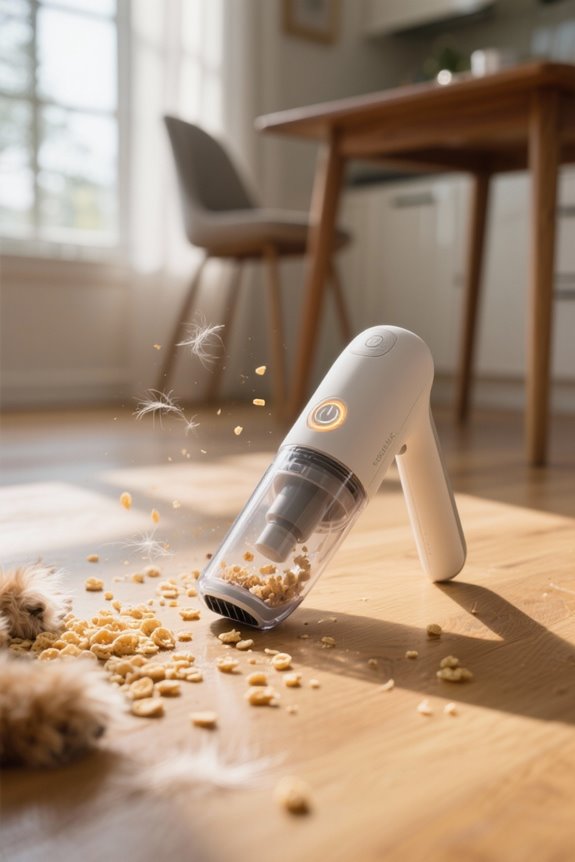
Demonstrating basic functions of a handheld vacuum is vital for helping children understand its uses and safety features. Start by showing kids how to turn the vacuum on and off, emphasizing safety when handling the device. Next, explain the purpose of various attachments, such as crevice tools for corners and upholstery brushes for furniture, ensuring they know how to maximize effectiveness. Encourage children to operate the vacuum at different angles to access tight spaces, allowing them to experiment with good techniques. It is important to monitor the dustbin or bag, teaching them when to check fullness and how to empty it correctly. Finally, provide them a designated area for practice, giving constructive feedback as they develop these important life skills. Consider introducing kids to handheld vacuums with HEPA filters, which help capture allergens and promote a cleaner environment as they learn to clean.
Recommended Products

LIGHTWEIGHT HANDHELD VACUUM CLEANER: The Dirt Devil Scorpion Plus Handheld Vacuum quickly tackles dust, debris and dirt whenever and wherever you need – from floors to stairs, couches and more.

🌀【15000PA Strong Suction Power】The handheld vacuum cordless is equipped with an advanced high-speed motor that provides powerful suction power up to 15kPa, which can meet your different cleaning purposes and clean more thoroughly. The cordless vacuum cleaner has long-lasting suction power and can easily remove dirt, dust and pet hair, keeping your space clean and tidy

POWERFUL CORDLESS HAND VACUUM: HyperVelocity suction delivers deep- cleaning performance in a compact, lightweight design, ideal for tackling pet hair, carpet, upholstery, car interiors, and everyday messes wherever they happen.
Teaching Proper Vacuuming Techniques
To guarantee effective cleaning with a handheld vacuum, children must learn proper vacuuming techniques that enhance efficiency and safety. Teaching kids to use their legs for pushing and pulling minimizes fatigue and promotes better control of the device. It is vital for them to check for small objects or obstacles on the floor before vacuuming, preventing potential damage to the vacuum. Children should learn to vacuum in straight lines or specific patterns, ensuring thorough coverage of the area. Additionally, reinforcing the importance of asking permission before vacuuming over questionable items fosters safety and accountability during chores. Utilizing analogies, such as comparing vacuuming to mowing the lawn, can effectively illustrate proper movement and coverage techniques for younger learners. It’s also beneficial to introduce them to lightweight designs that enhance user comfort and control, making the chore more manageable for kids.
Recommended Products

🔋 【Rechargeable Battery & Fast Charging】The electric vacuum cleaner features a built-in 4000mAh battery with a fast-charging port. It can be easily charged via a car charger, power bank, laptop, or wall outlet. It takes only 3 hours to fully charge. This reusable vacuum cleaner is a perfect, eco-friendly alternative to compressed air canisters, saving you both money and time

【FULL HOUSEKEEPING TOY SET】This home cleaning toy set includes a broom, a mop, a rag, dustpan & brush, a hand brush, a duster, an organizing stand, and even an electric handheld vacuum cleaner to fulfill every task in family life.

✔️12000Pa One-Touch Strong Suction Bug Vacuum Catcher: Tired of weak bug catchers that let spiders, stink bugs or flying insects escape? This cordless bug vacuum catcher uses one strong suction mode for simple, fast pickup. Just press the button and vacuum up spiders, stink bugs, moths, flies, ladybugs, ants, small roaches and other common indoor insects. No smashing bugs on walls, no chasing them with tissues, and less mess in bedrooms, kitchens, bathrooms, garages and basements.
Starting With Small Areas
Starting with small areas when training children to use a handheld vacuum enhances their confidence and builds foundational skills. Assigning tasks in manageable sections, like a specific corner or small room, reduces overwhelming feelings at a young age. It is effective to encourage vacuuming tasks on upholstery, small rugs, or car interiors, as these chores are less intimidating and more engaging. Demonstrating proper handling techniques guarantees children can efficiently use lightweight vacuum models designed for easy maneuverability. Setting clear expectations by providing visual reminders, such as checklists, assists in guiding their efforts thoroughly. Additionally, celebrating their achievements through positive reinforcement fosters a sense of accomplishment, motivating them to eventually tackle larger areas in household chores. Many handheld vacuums feature versatile attachments that can enhance cleaning versatility and make the experience more engaging for kids.
Encouraging Young Helpers
Engaging kids in household chores can be an effective way to foster a sense of responsibility and inclusion. From ages 3 to 5, children can learn to hold a handheld vacuum and assist with simple cleaning tasks. This early involvement allows kids to manage small messes, promoting independence as they take part in maintaining their environments. Encouraging young helpers contributes not only to their confidence but also introduces essential life skills, such as time management and the importance of cleanliness. Utilizing positive reinforcement, like simple rewards or praise, after completing vacuuming tasks further motivates kids. This approach helps them understand real-life applications of teamwork and personal responsibility while fostering a positive attitude toward household duties. Consider using vacuums with anti-tangle technology to simplify cleaning for kids and reduce maintenance efforts.
Establishing a Regular Vacuuming Routine
A consistent vacuuming routine can greatly benefit children by instilling habits of cleanliness and responsibility. Setting a specific time for vacuuming, such as daily quick clean-ups after meals or weekly room tidy-ups, helps create a structured environment. Using a chore chart can effectively outline vacuuming tasks, allowing kids to visualize their responsibilities and track progress. To keep the sessions manageable, limiting vacuuming to 5-10 minutes prevents fatigue and promotes engagement. Designating specific areas for kids to vacuum builds their familiarity with the task and boosts confidence in their abilities. Choosing lightweight models, such as the BISSELL Pet Hair Eraser, can make it easier for kids to handle and maneuver the vacuum. Finally, providing positive reinforcement through praise or small rewards guarantees that kids take pride in their contributions, fostering a sense of accomplishment that reinforces their new responsibility.
Troubleshooting Common Issues
Troubleshooting common issues with handheld vacuums is vital for maintaining peak performance and ensuring effective cleaning. First, confirm that the vacuum is charged or equipped with fresh batteries, as low power can diminish cleaning efficiency. Next, check for any blockages in the hose or nozzle, as these can impede suction, and clear any debris found. Ensure tools fit specific vacuum models to avoid effectiveness issues, as incompatibility can lead to diminished cleaning results. Instruct children to regularly empty the dustbin or change the bag, since a full container reduces performance. Additionally, training kids to inspect the filter and clean or replace it per the manufacturer’s instructions is imperative for sustained suction power. Finally, encourage children to seek assistance when they hear unfamiliar sounds or notice decreased performance, as these may indicate a mechanical issue needing attention.
Recommended Products

Replacement filter for models: CHV1410L, CHV1410, CHV9610, CHV1210, CHV1410B, CHV1510, BDH2000L, HHVI315JO42, HHVI320JR02

【Perfect Fit for Shark Wandvac ION W1】 This Shark Wandvac filter replacement is specifically designed to be fully compatible with models WV200, WV201, WV205, and WV220, directly comparing to Part #XHFWV200. It's the ideal Shark handheld vacuum cordless filter you need.

【Compatible Models】Our hepa filters perfectly compatible with VacLife VL188 VL189 handheld vacuum cleaner,note that it is upgrated and a litter bigger than original filter,but a little turn to the left and the filter was in place and the seal was tight.Ensuring top performance for your vacuum cleaner.
Reflecting on Progress and Skills Developed
Reflecting on progress and the skills developed through the use of a handheld vacuum provides valuable insights for children. Regular engagement with this tool promotes fine motor skills, aiding in effective maneuvering. By reflecting on progress, children can identify areas where they excelled, as well as aspects needing improvement, supporting a growth mindset. Observing their advancements in vacuum handling serves to build confidence and reinforces their sense of accomplishment. Additionally, incorporating self-assessment practices empowers kids to take ownership of their cleaning tasks, motivating them to set personal goals for future efforts. Constructive feedback during these reflections nurtures an understanding of effective cleaning techniques, highlighting the importance of maintaining a tidy environment while reinforcing critical life skills. Many modern handheld vacuums feature HEPA filters that capture up to 99.9% of dust and allergens, improving air quality and making them ideal tools for teaching children about maintaining a clean and healthy home.
Frequently Asked Questions
At What Age Should Kids Start Doing House Chores?
Children can start doing age-appropriate house chores as early as 18 months. Following age guidelines enhances chore benefits, fosters skill development, and reinforces responsibility, laying a foundation for independence that grows with their maturity.
How to Gamify Chores for Kids?
Transforming chores into vibrant adventures, families can ignite interest by introducing chore rewards, hosting cleaning races, and creating fun challenges like vacuum contests. Such playful competitions foster joy, making everyday tasks lively and engaging for children.
How to Teach Someone to Vacuum?
To teach effective vacuuming, introduce basic vacuuming techniques, emphasize safety tips, offer motivational strategies, and establish chore schedules. This structured approach helps build competence and confidence, promoting a positive attitude towards household responsibilities.
How to Get Kids to Do Chores Without Yelling?
To get kids to do chores without yelling, one might employ positive reinforcement strategies, establish routine responsibilities, encourage teamwork benefits, and utilize an understanding consequences approach, fostering independence and cooperation while minimizing confrontation.
Conclusion
Teaching children to use a handheld vacuum effectively can enhance their sense of responsibility and independence. According to a study from the National Cleaning Institute, involving kids in household tasks can increase their life skills by over 30%. By choosing the right vacuum, demonstrating techniques, and encouraging regular use, parents can foster beneficial habits. Solid skills in managing simple chores will not only keep areas clean but also empower kids, laying a foundation for future responsibilities and self-reliance.


