As an Amazon Associate, we earn from qualifying purchases. Some links on this site are affiliate links at no extra cost to you. Our recommendations are based on thorough research and editorial judgment.


Suction Power, Air Watts, and Kpa: What Those Vacuum Specs Really Mean

Suction power, measured in air watts (AW) and kilopascals (kPa), is essential for evaluating vacuum cleaners’ effectiveness. Higher AW ratings, like 180-250 for upright and canister vacuums, indicate better dirt removal capabilities. A minimum of 1,600 Pa is necessary for efficient cleaning, while values around 10-15 kPa are ideal for thick carpets or pet hair. Understanding these specifications helps consumers choose suitable vacuums for their needs, revealing the nuances of performance metrics and cleaning efficiency.
Key Takeaways
- Suction power is measured in air watts (AW), pascals (Pa), and inches of water lift, reflecting a vacuum’s cleaning effectiveness.
- Higher air watt ratings, typically above 100 AW, indicate a vacuum’s ability to handle heavier debris.
- Effective vacuums should maintain suction levels of 10 kPa for everyday use and ideally 15 kPa for challenging environments.
- Upright vacuums require 180 to 200 AW or 1,400 to 1,600 Pa, while canister vacuums need 220 to 250 AW or 1,700 to 2,000 Pa.
- Robot vacuums should achieve at least 2,500 to 6,000 Pa for effective cleaning, especially for pet hair removal.
Understanding Suction Power
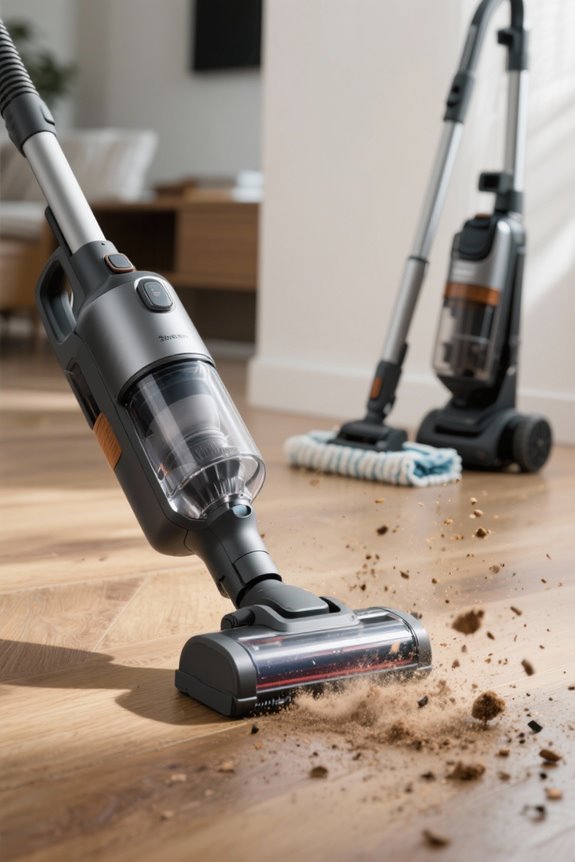
When evaluating vacuum cleaners, how important is suction power for effective cleaning? Suction power is critical as it determines the vacuum’s ability to extract dirt and debris from various surfaces. Measured in air watts or pascals, higher values indicate superior cleaning performance. Typically, upright vacuums require about 180 to 200 AW or 1,400 to 1,600 Pa, while canister models demand between 220 to 250 AW or 1,700 to 2,000 Pa for powerful suction. Understanding these metrics aids consumers in choosing the right vacuum cleaner. Furthermore, a reliable filtration system is essential for peak performance, but regular maintenance, including cleaning filters and emptying dust containers, is important to maintain strong suction over the vacuum’s lifespan. Models with variable speed control offer the flexibility to adjust suction power, optimizing performance across different surfaces.
Recommended Products

Effortless & Efficient Sweeping: This battery-powered sweeper dramatically reduces operator fatigue and increases productivity, with a battery-operated main broom, side brushes, and dust fan

Self-Propelled Drive: Powered traction drive system moves the machine forward automatically, reducing operator strain during long cleaning shifts. Operators guide instead of push, making it ideal for warehouses, supermarkets, distribution centers, and mid-to-large commercial facilities between 15,000–50,000 ft²

High-Efficiency Cleaning: boasts a 34" brush cleaning path and 38.8" squeegee vacuuming width, ensuring comprehensive cleaning for large floor areas with a working efficiency of 75,000 sqft/h.
How Suction Power Is Measured
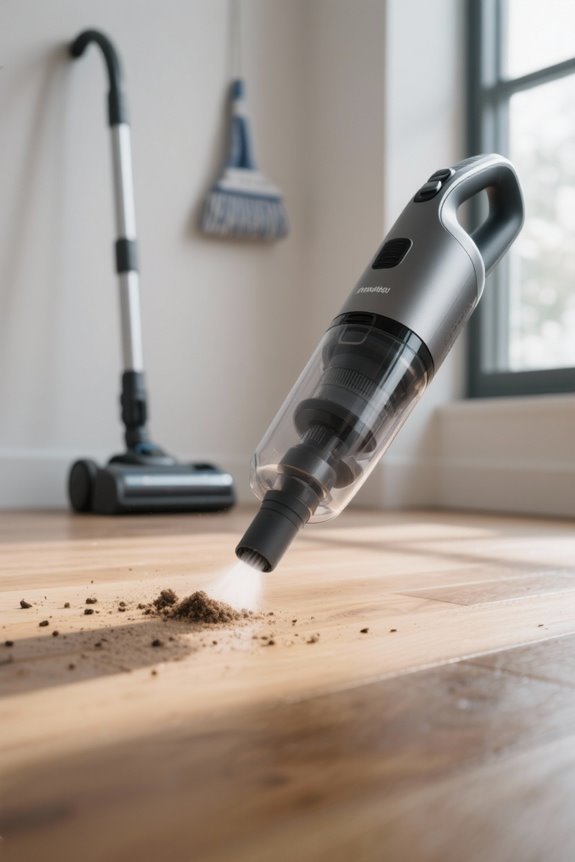
Suction power in vacuum cleaners is quantified through several distinct measurements, including air watts (AW), pascals (Pa), and inches of water lift (inH2O). Air watts combine suction and airflow to indicate overall cleaning performance, essential for understanding a vacuum’s efficiency. Higher air watt numbers, often around 100 AW or more, indicate a vacuum’s capability to lift heavier debris effectively. Pascals measure pressure, with efficient vacuums typically achieving suction levels beyond 1,000 Pa. Additionally, sealed suction, expressed in inches of water lift, reveals how well a vacuum maintains suction under load. Effective vacuums should ideally reach at least 10 kPa for everyday cleaning and 15 kPa or higher to tackle challenging environments, like homes with thick carpets or pet hair. Models equipped with HEPA filters capture 99.97% of allergens, significantly improving indoor air quality.
Recommended Products

Fast and Vast: Is a small machine forcing your team to work twice as long on large floors? This heavy duty vacuum cleaner, assembled in the USA, clears a 30-inch path to finish 29,000 square feet an hour so you can get the job done faster
Convenient Design: Oversized canister handles for quick removal, a 6-ft power cord for unrestricted reach & a spacious 6 U.S. gallon disposable bag lasting up to 6 months - all designed for a hassle-free cleaning experience, from start to finish.

Warranty Coverage: Comprehensive product protection with 10 year warranty for your peace of mind
The Role of Air Watts in Vacuum Performance

Air Watts (AW) serve as a crucial metric in evaluating vacuum cleaner performance, effectively combining airflow and suction pressure to present an accurate assessment of cleaning capability. This measurement provides a clearer picture than motor wattage alone, revealing the efficiency of different models. A typical high-performance vacuum generates between 120 and 200 Air Watts, while canister vacuums can achieve up to 250 AW. Higher Air Watt ratings often indicate superior suction power, allowing vacuums to handle heavy debris more effectively. Brands like Dyson utilize Air Watts in their marketing, showcasing their advanced motor technology. Understanding Air Watts helps consumers select vacuums that align with their cleaning needs, ensuring peak vacuum performance and satisfaction with overall cleaning results. In 2026, stick vacuums feature advanced suction technology for effective cleaning on all surfaces, further enhancing their performance.
Recommended Products

7-Year Warranty for Your Peace of Mind - Feel confident in your investment with Sebo's comprehensive warranty coverage: an impressive 7-year warranty on both brush and suction motors, plus 5 years of protection on all non-wear parts and labor. Proudly manufactured in Germany, the K3 is meticulously engineered to the highest standards, ensuring reliability, durability, and performance you can trust year after year.
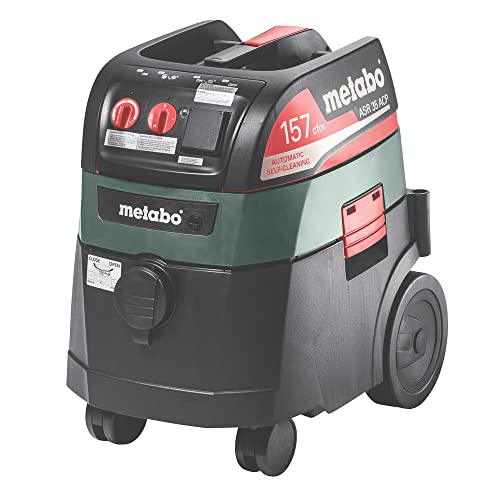
For extraction from the power tool in continuous mode, both on construction sites and in the workshop
Choose between low and high suction power
Exploring PasCals (Pa) and Kilopascals (kPa)
Many consumers may not realize the significance of Pascals (Pa) and kilopascals (kPa) as units of measurement for vacuum suction power, but these metrics play an essential role in determining a vacuum’s cleaning efficiency. A kilopascal equals 1,000 Pascals, making it easier to express higher suction levels. Typical household vacuums operate between 1,000 to 2,000 Pa, while high-performance models exceed 3,000 Pa, enhancing their cleaning ability. For effective daily cleaning, vacuums should reach at least 10 kPa, increasing to 15 kPa for thicker carpets or pet hair. Models like the AIRDIYA Cordless Vacuum Cleaner with 40Kpa suction power are examples of high-performance vacuums that offer efficient debris removal. Strong suction power, accurately measured in Pascals and kilopascals, efficiently lifts debris, particularly heavier particles, indicating that higher Pa and kPa ratings lead to improved vacuum specs and performance.
Ideal Suction Levels for Different Vacuum Types
When selecting a vacuum cleaner, understanding the ideal suction levels for different types helps consumers make informed choices. Upright vacuums typically require suction power of 180 to 200 Air Watts, or 1,400 to 1,600 pascals, for superior cleaning performance on carpets. Canister vacuums benefit from higher suction levels between 220 to 250 AW, or 1,700 to 2,000 Pa, effectively cleaning hard floors and upholstery. Stick vacuums should ideally provide 100 to 150 AW, or 800 to 1,200 Pa, for efficient cleaning of light debris. Handheld vacuums operate well with 20 to 50 AW, or 160 to 400 Pa, suitable for small area cleanups. Robot vacuums require at least 2,500 to 6,000 Pa, especially in homes with pet hair. For allergen control, vacuum cleaners equipped with HEPA filters and UV-C light technology are particularly effective at capturing dust mites and other allergens.
Recommended Products

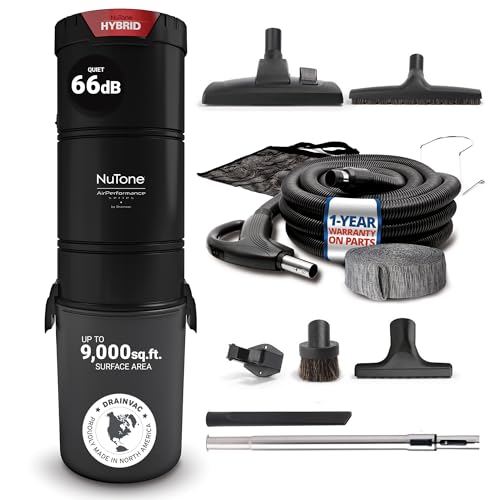
POWERFUL 610 AIR WATTS FOR WHOLE HOUSE CLEANING: This central vacuum system delivers commercial-grade suction that removes embedded dirt, pet hair, and allergens from carpets and hard floors. Covers homes up to 3,000 sq ft from a single compact unit installed in garage or basement

DuoClean PowerFins Technology: Two brushrolls—PowerFin and soft roller—provide nonstop contact on carpet and hard floors for deeper cleaning and more debris pickup in every pass (vs. original DuoClean).

SHARK’S ULTRA-POWERFUL VACUUM: The Vertex is an ultra-powerful vacuum, with incredible suction and innovative cleaning technologies..1344.0 watts.Cord length (ft.): 30, Hose length (ft.): 5.5..Amperage : 11.8A
Common Misconceptions About Vacuum Suction
Common misunderstandings regarding vacuum suction can lead consumers to make misguided choices when selecting a vacuum cleaner. Many incorrectly assume that higher motor wattage directly correlates to greater suction power. In reality, metrics like Air Watts and pascals offer a clearer assessment of performance. Another misconception is that more suction always translates to better cleaning power, although effective cleaning also hinges on the balance between suction power and airflow. Users often believe noisier vacuums imply higher suction; however, advanced motor technology can provide excellent suction quietly. Additionally, the idea that the highest suction setting is essential for all cleaning tasks overlooks the benefits of adjustable suction settings for specific surface needs. True cleaning capability relies on a combination of these factors beyond mere vacuum specs. When choosing a vacuum, it’s crucial to consider HEPA filtration to effectively capture allergens and improve air quality.
Factors Influencing Vacuum Suction Power
Several factors greatly influence vacuum suction power, which plays an essential role in determining overall cleaning efficiency. Clogged filters can considerably restrict airflow, resulting in reduced suction power; therefore, regular maintenance is critical. The diameter of the vacuum’s hose also affects debris movement; larger diameters minimize clogging risks, enhancing suction effectiveness. Additionally, overfilled dust containers hinder airflow, urging frequent emptying of bins for premier performance. Wear and tear from prolonged use further diminishes suction capabilities, highlighting the need for condition monitoring. The type of surface being cleaned matters as well; thicker carpets require higher suction levels, typically around 15 kPa or more, to effectively lift embedded dirt and hair, addressing various cleaning needs with exceptional performance. Many cartridge filters are designed for both wet and dry cleaning, emphasizing the importance of vacuum model compatibility to ensure optimal function and prevent potential damage.
Choosing the Right Vacuum Based on Suction Specifications
Selecting the right vacuum involves understanding essential suction specifications, which can greatly impact cleaning effectiveness. For effective cleaning, consumers should choose a vacuum cleaner with a suction power of at least 10 kPa, while 15 kPa is recommended for homes with thick carpets or pets. Air Watts is another key metric; upright vacuums should ideally offer 180 to 200 AW, while canister vacuums should provide 220 to 250 AW. Checking for vacuums rated with a minimum suction pressure of 1,600 Pa helps guarantee adequate performance on various surfaces. Additionally, balancing high suction strength with sufficient airflow (CFM) is vital, as proper airflow transports dust and pet hair into the dust container, enhancing overall cleaning effectiveness. The MONSGA Cordless Vacuum Cleaner (MV3) exemplifies a high-performance model with 45KPa suction power and a 400W brushless motor, demonstrating the benefits of powerful suction in maintaining cleanliness across various surfaces.
Recommended Products

【M Class Automatic Filter Clean】The automatic HEPA filter cleaning system is designed to maintain optimal suction performance by periodically cleaning the filter without manual intervention. This system automatically initiates filter cleaning every 20 seconds, preventing dust buildup and ensuring continuous operation, in compliance with OSHA regulations for airborne particulate control in the workplace.


Powerful Multipurpose Cleaning: The efficient brushless motor of the Aspiron canister vacuum cleaner generates over 40Kpa of strong suction for vacuuming dust, dirt, pet hair, and more
Frequently Asked Questions
What Is a Good Suction Power for Vacuum Cleaner Kpa?
A vacuum cleaner with suction power above 10 kPa is ideal for dirt removal on hard floors, while 15 kPa enhances carpet performance. Factors like filtration system, size comparison, energy efficiency, and noise level also matter. User reviews guide maintenance tips.
Is Higher Kpa Better for a Vacuum Sealer?
Higher kPa greatly enhances suction efficiency, optimizing vacuum performance. This pressure measurement guarantees superior sealing strength, beneficial across various usage scenarios. Device comparison reflects consumer feedback favoring models exceeding 15 kPa for operational cost-effectiveness and longevity.
Does Higher Wattage in a Vacuum Mean Better Suction?
Higher vacuum wattage does not necessarily equate to better suction. Factors such as suction technology evolution, motor type differences, and vacuum design influence overall performance, often leading to a nuanced energy efficiency comparison that impacts consumer preferences.
How Many Air Watts Is a Good Vacuum Cleaner?
In the domain of vacuum cleaners, models achieving 180 to 250 Air Watts excel in carpet cleaning, especially for pet hair removal, showcasing their effectiveness. Evaluating price points and filter types offers insight into durability issues and maneuverability.
Conclusion
In conclusion, understanding vacuum specifications such as suction power, air watts, and kPa is essential for making informed purchasing decisions. For instance, a vacuum with 100 air watts can efficiently clean a 1,000-square-foot area in under 30 minutes. The metrics discussed shed light on a vacuum’s performance capabilities, making it easier to compare models based on specific needs. Ultimately, selecting the right vacuum involves considering how these specifications align with the intended cleaning tasks and environments.


