As an Amazon Associate, we earn from qualifying purchases. Some links on this site are affiliate links at no extra cost to you. Our recommendations are based on thorough research and editorial judgment.


Vacuum + Mop Combo Vs Separate Devices: Which Cleaning Style Fits Your Home?

Consumers choosing between vacuum and mop combos and separate devices must consider their cleaning needs. Combo devices integrate both functions, yet often struggle with tough messes and may dilute stains. In contrast, dedicated vacuums and mops enhance efficiency, featuring higher suction power and better performance on stubborn spills. Separate devices usually last longer with respect to overall effectiveness and maintenance. Evaluating home environments, cleaning tasks, and performance benchmarks will inform the best choice. More insights await regarding specific features and user feedback.
Key Takeaways
- Vacuum and mop combos offer convenience for light cleaning but may struggle with tough messes and sticky spills.
- Separate vacuums and mops generally provide superior performance on larger spills and difficult stains, ensuring thorough cleaning.
- Enhanced navigation and advanced suction power in separate devices can lead to more effective cleaning across various floor types.
- Consider maintenance: vacuum-mop combos require regular pad and filter replacements, while dedicated devices may have lower upkeep.
- Future cleaning technology trends are focusing on autonomous, efficient devices with improved air quality features, making separate devices a promising choice.
Understanding Vacuum and Mop Combos
While some homeowners may seek simplicity in cleaning, vacuum and mop combos offer a multifaceted approach to maintaining floor hygiene. These devices integrate vacuuming and mopping functionalities, designed for concurrent cleaning of dust, dirt, and spills across various floor types. Utilizing advanced technology, such as sensors and mapping, robot vacuum-mop combos can efficiently navigate entire rooms autonomously. Most models range from basic options, featuring a single water reservoir and static mop pads, to advanced versions equipped with dual-tank systems and self-cleaning capabilities. However, cleaning efficiency often varies, as many combos struggle with deep cleaning, particularly sticky stains or larger spills, limiting their effectiveness compared to separate devices. Individual home environments and cleaning needs ultimately dictate the best choice for homeowners. For example, models like the BISSELL CrossWave Pet Pro are tailored to manage both wet and dry messes effectively with dual-tank technology.
Effectiveness of Vacuum and Mop Combos
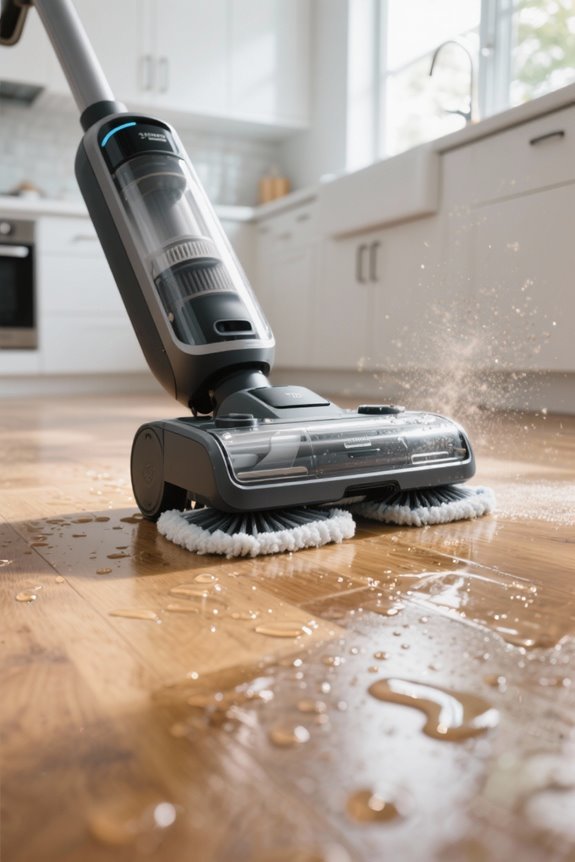
Vacuum and mop combos present a blend of cleaning capabilities that may appeal to homeowners seeking convenience. However, many robot vacuum and mop models struggle with tough messes, often failing to clean sticky spills and dried stains effectively. User feedback indicates that the mopping function tends to dilute messes rather than provide a deep clean, leading to concerns about smearing floors. While they offer dual functionality, real-world performance proves that traditional methods outperform these devices, particularly on difficult stains. Navigation challenges further hinder their cleaning performance across various floor types and around household obstacles. As a result, many users find that dedicated vacuums excel in suction power, leading to better overall results in vacuuming and mopping tasks.
Advantages of Using Separate Devices
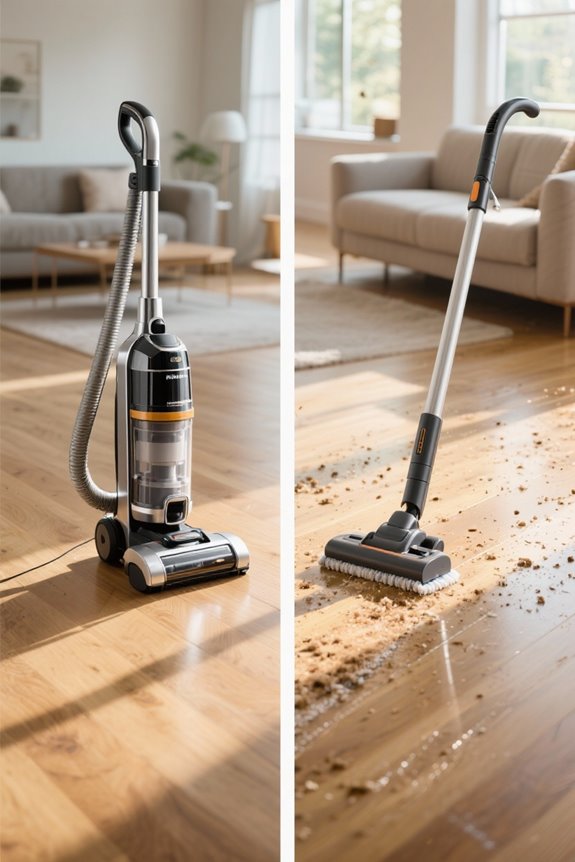
Using separate vacuum and mop devices can dramatically enhance cleaning efficiency, as each unit is specifically designed to address distinct tasks effectively. Separate devices often provide superior cleaning performance for various jobs, particularly larger spills and tougher messes. Users find that dedicated robot mops excel at deep cleaning floors, as they avoid the streaking and inadequate dirt removal seen in 2-in-1 combos. Additionally, many models feature an auto-empty function, reducing maintenance frequency compared to combined devices that still require hands-on cleaning of mop pads. Flexible options, such as wet-dry vacuums, cater to heavier cleaning tasks on carpets, ensuring that both vacuuming and mopping duties are handled based on each device’s strengths, optimizing overall cleaning outcomes. Lightweight design enhances maneuverability, ensuring that vacuuming tasks can be completed with ease and efficiency.
Assessing Your Cleaning Needs
How can homeowners effectively determine their cleaning needs? Evaluating the types of messes encountered in a home is essential, as robot vacuum-mop combos often struggle with tough stains when compared to separate devices. Homeowners should also consider their flooring types; robot combos excel on hard surfaces, while dedicated vacuums provide superior performance on carpets due to better suction power. Reviewing the frequency of cleaning tasks is vital; a robot vacuum may suit daily maintenance, but a wet-dry vacuum is often more effective for deep cleaning. Additionally, households with pets and children may generate heavier dirt, making separate devices a more suitable choice. Ultimately, weighing convenience against performance can guide homeowners in selecting the best cleaning solution. Regular replacement of vacuum parts, such as replacement wheels, is crucial for maintaining optimal performance and ensuring efficient cleaning.
Key Features to Look For
When selecting a vacuum and mop combo, several key features greatly influence overall performance and usability. High suction power, typically between 2,000 Pa and 10,000 Pa, enhances the device’s ability to clean various floor types effectively. Advanced navigation technology is essential for helping the device avoid obstacles and ensuring thorough coverage throughout a space. A dual-tank system helps maintain cleaning efficiency, preventing cross-contamination during mopping. Models equipped with self-cleaning pads minimize maintenance, allowing users to focus more on cleaning rather than upkeep. Additionally, some devices offer self-emptying capabilities, considerably reducing manual labor. Devices with app functionality provide remote management and scheduling options, enhancing the user experience and control over cleaning tasks. Some vacuums, such as the Roborock Q7 M5+, feature innovative PreciSense LiDAR navigation for optimized cleaning paths and reduced cleaning times.
Recommended Products

DREAME's Thinnest Robot Vacuum at 3.13in (7.95cm): At just 3.13in (7.95cm) slim, X60 Max Ultra Complete redefines what a robot vacuum can reach. It glides under sofas and beds with ease, reaching hidden dust in low spaces where traditional cleaners get stuck.

𝐅𝐥𝐨𝐨𝐫𝐬 𝐂𝐥𝐞𝐚𝐧𝐞𝐫 𝐭𝐡𝐚𝐧 𝐘𝐨𝐮𝐫 𝐃𝐢𝐧𝐢𝐧𝐠 𝐓𝐚𝐛𝐥𝐞 — 𝐁𝐚𝐫𝐞𝐟𝐨𝐨𝐭 𝐀𝐧𝐲𝐭𝐢𝐦𝐞: HydroJet 2.0 self-cleaning roller mop uses real-time electrolyzed water to eliminate 99.99% of germs on every pass — scientifically sanitizing, not just rinsing with clean water. Safe for crawling babies, toddlers & barefoot families.140°F hot-water wash after every cycle keeps mop pads fresh & bacteria-free.

Self-Cleaning Mop with FlowWash — Always Cleans with Fresh Water. Tired of robot mops spreading dirty water? This robot vacuum and mop combo continuously washes its track mop in real time, so only clean water touches your floors. With up to 7x more contact area and 15x longer stain scrubbing, it cleans deeper with every pass. 212°F hot water loosens dirt, 12N pressure scrubs it away, while a scraper removes residue and dirty water is collected into a sealed tank.
Comparing Cleaning Performance
While some may appreciate the convenience of robot vacuum-mop combos, a closer examination reveals that these devices often fall short in cleaning performance. Many users report that these 2-in-1 machines struggle with deep cleaning tasks, particularly when addressing sticky messes or larger spills. Often, vacuum-mop combos effectively perform one function but fail at the other, leading to mixed results. In contrast, separate devices are generally preferred for superior performance, especially in tackling heavy soil and dried stains. Especially, certain models, like the Roomba j7, excel in vacuuming, yet their mopping capabilities are secondary, resulting in unsatisfactory cleaning outcomes. Ultimately, traditional cleaning methods, including manual mopping, continue to offer more efficient and effective solutions for maintaining cleanliness. Additionally, high-efficiency cyclonic dust collection systems in wet-dry vacuums provide superior dust capture, ensuring better air quality and cleaning performance.
User Experiences and Feedback
What do users truly think about robot vacuum-mop combos compared to separate devices? Many reports indicate dissatisfaction with the mopping functions of these combos, with users highlighting that models like Roomba often leave messes diluted instead of cleaned. Feedback from various users shows a strong preference for dedicated vacuum and mop systems, as experienced with products like the i7 complemented by a standalone mop. Concerns about streaking and ineffective cleaning persist among those using 2-in-1 devices, showing limitations in their capabilities. Conversely, users of separate devices praise features like auto-empty functionality for vacuums, citing added convenience. Some users appreciate the HEPA filtration systems found in select vacuum models, which improve indoor air quality by trapping allergens. Overall, satisfaction appears higher among users opting for individual vacuum and mop units, noting superior cleaning efficiency and results.
Cost Considerations and Value
Cost considerations play a significant role in the decision-making process for consumers weighing robot vacuum-mop combos against separate devices. Typically, robot combos range from $500 to $1,300, while separate high-quality vacuum and mop devices together cost about $800 to $1,200. Although some robot devices have advanced features, such as self-cleaning bases, they may not outperform high-end vacuums and mops. Users often report dissatisfaction with the mopping capabilities of 2-in-1 machines, raising concerns over their overall value. Initial expenses related to purchasing separate devices could be offset by their superior cleaning performance, particularly for households with challenging cleaning needs. Additionally, maintenance costs for robot combos can include regular purchases of mop pads and filters, which tend to be lower for traditional cleaning devices. When selecting a vacuum, it’s important to consider suction power as it is crucial for effective cleaning according to the best bagless vacuum cleaners of 2026.
Maintenance and Upkeep
Maintenance and upkeep of vacuum-mop combos can often be more demanding compared to using separate devices. Users must regularly empty dust containers and refresh mop pads, which can increase the frequency of cleaning tasks. While the convenience of these combos is appealing, many find that the mopping function does not perform as well as standalone mops, leading to more manual cleaning. Although advanced models with self-emptying docks reduce maintenance frequency, they still require users to manually clean the dock and mop pads periodically. In contrast, separate vacuum and mop devices typically offer enhanced cleaning efficacy, effectively tackling specific messes without the complications of upkeep associated with a two-in-one unit, making maintenance an essential consideration for users. HEPA filters effectively trap allergens and improve indoor air quality, which is crucial for allergy sufferers or those with respiratory issues.
Recommended Products

Multi-Mop Switching Dock and Three-Solution Compartment: Switch mops effortlessly with the Multi-Mop Switching Dock. It auto-selects the right mop for each area, preventing cross-contamination for a deeper clean. Plus, the three-solution compartment comes with different liquid solutions that cater to all floor types, to help keep your space smelling pleasant and inviting.

Note: Narwal Flow 2 with Auto Water Refilling and Drainage System means the dock will automatically fill and drain water. Please check the installation environment before purchasing.

Unrivaled Zero-Tangling Prowess: No more worries about hair tangling. Engineered with cutting-edge technology, DuoDivide Main Brush and FlexiArm Arc Side Brush handle hairs effortlessly and effectively, eliminating hair-wrapped troubles.
Future Trends in Cleaning Technology
Advancements in cleaning technology are set to transform the functionality and efficiency of vacuum-mop combos, addressing the maintenance concerns associated with current models. The emergence of advanced robots will feature enhanced navigation systems, mimicking human perception for better obstacle avoidance and cleaning efficiency. Innovations will introduce multi-functional devices capable of recognizing various floor types, adjusting cleaning methods accordingly to guarantee optimized cleaning in diverse environments. Future models will incorporate AI to learn user behavior, creating tailored cleaning schedules that enhance performance in real-life scenarios. Additionally, improvements in cleaning power will enable these devices to tackle sticky messes and tough stains effectively. Integration of smart features will allow seamless control through apps and voice commands, enriching the overall user experience. Furthermore, HEPA filtration systems in future models will enhance indoor air quality by capturing 99.97% of allergens and dust, making them ideal for allergy sufferers and pet owners.
Frequently Asked Questions
What Are the Disadvantages of Vacuum Mop Combos?
Vacuum mop combos face several disadvantages, including battery life issues that limit operational time, navigation limitations that often lead to getting stuck, and subpar cleaning efficiency, especially on tough messes, leaving users dissatisfied with their performance.
Is It Better to Get a Separate Robot Vacuum and Mop?
Opting for separate robot vacuums and mops enhances cleaning efficiency and addresses maintenance needs more effectively. User experiences reveal that dedicated devices outperform hybrids, particularly in robot performance for diverse messes and thorough surface cleaning.
Do Vacuum Mop Combos Really Work?
Like a juggling act on a tightrope, vacuum-mop combos struggle with effectiveness. User reviews highlight challenges, while maintenance tips suggest improvements. Overall, effectiveness comparison favors traditional methods for tackling demanding cleaning tasks.
Is a Vacuum Mop Better Than a Regular Mop?
A vacuum mop combo generally lacks the cleaning effectiveness of a regular mop, according to user experience. The efficiency comparison often reveals that dedicated mopping tools handle tough messes better, leading to more satisfactory results overall.
Conclusion
To sum up, choosing between a vacuum and mop combo versus separate devices depends on a homeowner’s unique cleaning needs. While some may argue that separate units offer better performance, modern combos have made significant improvements in efficiency and user convenience. Key features such as multi-surface capabilities and smart navigation in these combos can meet various household demands effectively. As a result, it is essential to assess the specific requirements before making a decision, ensuring the selected cleaning method delivers satisfactory results.


