As an Amazon Associate, we earn from qualifying purchases. Some links on this site are affiliate links at no extra cost to you. Our recommendations are based on thorough research and editorial judgment.

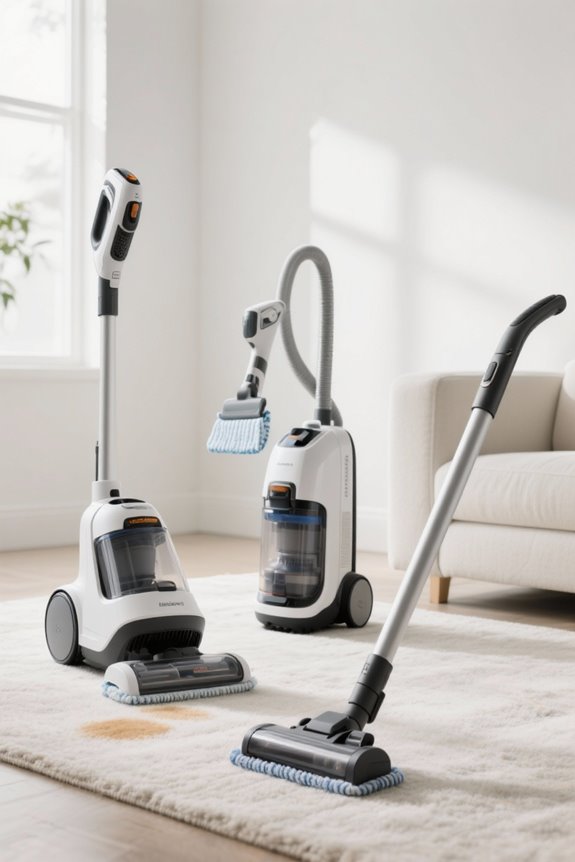
Advanced Carpet Cleaning Routine: Combining Vacuum, Spot Treatment, and Mop

An advanced carpet cleaning routine integrates vacuuming, precise spot treatment, and mopping to achieve peak cleanliness. Effective vacuuming removes dirt and allergens, using a high-suction vacuum or HEPA filters to enhance air quality. Immediate spot treatment addresses stains with suitable cleaners, while mopping with optional eco-friendly substances tackles embedded dust. Ensuring thorough drying prevents mold growth; ventilation aids this process. Regular maintenance encourages lasting freshness, and learning more about specific techniques can enhance overall carpet care.
Key Takeaways
- Start with thorough vacuuming to eliminate dust and debris, adjusting the vacuum height for optimal effectiveness on different carpet types.
- Immediately spot treat stains with appropriate cleaning solutions using a soft-bristled brush or microfiber cloth for effective removal.
- Use a suitable carpet cleaner with steam methods to deep clean while managing moisture and sanitizing your carpets.
- Ensure proper airflow and ventilation while allowing carpets to air dry to prevent mold growth after cleaning.
- Regularly apply carpet deodorizing powder between cleanings to absorb odors and maintain freshness in the carpet fibers.
Importance of a Comprehensive Carpet Cleaning Routine
A thorough carpet cleaning routine is essential for maintaining a clean and healthy indoor environment, as neglecting regular cleaning can lead to the accumulation of dust, allergens, and debris. Regular vacuuming, ideally at least once a week, considerably reduces dirt buildup, prolongs carpet lifespan, and minimizes the chances of deep-set stains. Immediate spot treatment is vital when dealing with stains; faster responses improve the likelihood of successful removal. Although mopping carpeted areas is not recommended, using suitable carpet cleaners with steam methods effectively sanitizes carpets while managing moisture levels. Integrating these various cleaning techniques enhances not only the aesthetic appearance of carpets but also contributes to superior indoor air quality, thereby fostering a healthy living environment free from irritants. High suction power from 2300Pa to 6000Pa ensures effectiveness across a variety of carpet types, including high-pile carpets.
Preparing Your Space for Carpet Cleaning
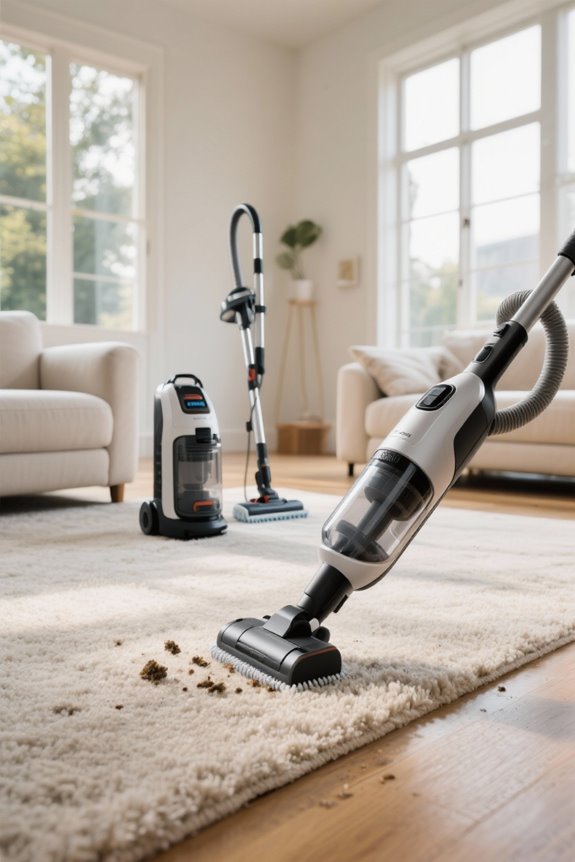
Before starting a carpet cleaning routine, it is crucial to prepare the space effectively. To guarantee extensive access to the carpet, one should clear the area of clutter and small objects, which also helps prevent injury during the process. It is advisable to remove large furniture pieces, allowing for thorough cleaning, and enhancing the effectiveness of vacuuming and spot treatments. Additionally, securing or removing rugs can prevent damage. Before beginning, check and vacuum the cleaner to enhance suction power, ensuring it effectively removes dirt and debris. Opening windows or doors improves ventilation, helping to disperse cleaning solution fumes and speeding up drying time, which contributes to the proper care of the carpet and overall cleaning routine. For an efficient cleaning process, consider using a cordless car vacuum with high suction power and specialized attachments to tackle hard-to-reach areas and ensure comprehensive dirt removal.
Essential Tools and Supplies for Effective Cleaning
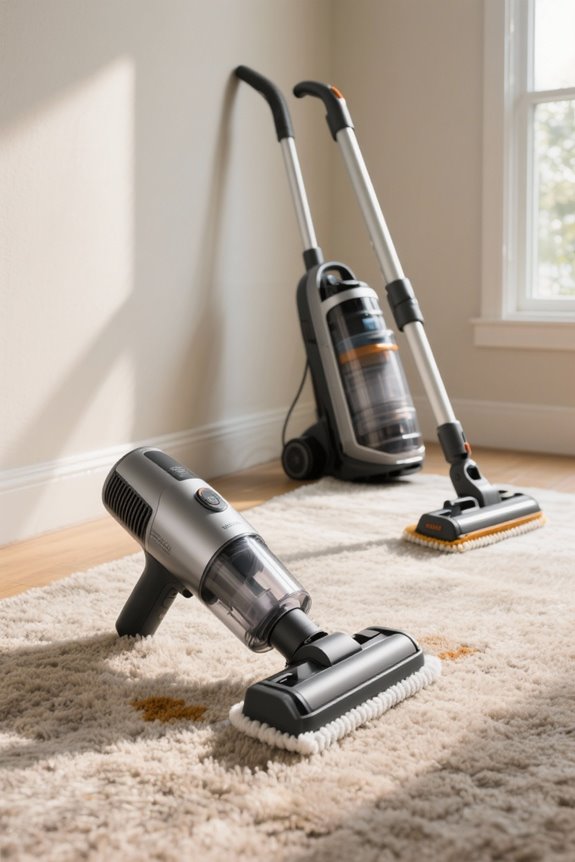
Preparing for carpet cleaning involves more than clearing the space; having the right tools and supplies is critical to achieving a thorough clean. Essential tools include a high-suction vacuum for removing loose debris efficiently, a carpet cleaner for deep washing, and suitable cleaning solutions tailored for various stains and carpet fibers. A soft-bristled brush assists in applying spot treatments evenly, maximizing stain removal effectiveness. Microfiber cloths are recommended for blotting stains, as they trap dirt without damaging carpet fibers. Additionally, keeping a disinfectant spray, such as white vinegar, helps to tackle odors and germs during maintenance. Protective gear, like gloves, safeguards hands from chemicals and dirt during the entire cleaning process, enhancing safety and comfort. For effective cleaning, consider using a high-quality HEPA filter vacuum to improve indoor air quality by capturing fine dust particles.
Mastering the Vacuuming Technique
Mastering the vacuuming technique is essential for maintaining clean carpets and extending their lifespan. Adjusting the vacuum height setting based on carpet type is vital, as it guarantees effective dirt and debris capture while protecting delicate carpet fibres. Vacuuming in overlapping rows helps achieve thorough dirt removal, particularly in high-traffic areas prone to matting. Utilizing vacuum attachments can reach corners, edges, and baseboards where dirt often accumulates, maximizing cleaning methods’ efficiency. Regularly emptying the vacuum bag or container maintains peak suction power, preventing decline in performance. Additionally, performing vacuuming before spot cleaning or mopping enhances the overall efficiency of an extensive carpet care routine, guaranteeing a clean surface for subsequent treatments. For those with allergies, using vacuums with advanced filtration systems can effectively reduce allergens, making them a valuable addition to your cleaning arsenal.
Spot Treatment for Common Carpet Stains
Spot treatment for common carpet stains requires an effective approach to guarantee carpets remain in excellent condition. For food and beverage stains like red wine, immediate blotting is essential. After that, applying a vinegar solution of one cup vinegar mixed with one cup clean water can help. Grease stains benefit from a baking soda application, absorbing the oil before cleaning with a vinegar-water mixture. Pet stains should first be blotted, then treated with equal parts white vinegar and water, followed by baking soda for odor neutralization. Ink stains require gentle dabbing with rubbing alcohol on a cotton ball. Always test any cleaning solution on a hidden area to prevent damage or discoloration to the carpet fibers. Using washable filters in your vacuum can enhance durability and reduce costs during regular carpet maintenance.
Best Practices for Mopping Carpeted Areas
While mopping carpeted areas is not a common practice, certain situations may call for careful consideration. For effective results, always vacuum to remove loose dirt before initiating any cleaning routines. If mopping is necessary, make sure that the mop is barely damp and use a carpet cleaning solution specifically formulated for carpets, not hard surfaces. This approach helps prevent damage and mildew growth. When addressing stains, use a spot cleaner on a hidden area first to test compatibility. In high-traffic areas, consider cleaning daily to manage dirt accumulation and clean up spills immediately to minimize impact. Bagged vacuum cleaners are recommended for their ability to contain dirt and allergens effectively, preventing them from re-entering indoor air. Following these essential tips guarantees a thorough cleaning process that maintains carpet integrity while addressing tough spots effectively.
Ensuring Thorough Drying After Cleaning
Proper drying methods must be implemented following carpet cleaning to avert issues with mold and mildew formation. Thorough drying is essential, as damp conditions can encourage these harmful growths. It is advisable to air dry carpets for 6 to 10 hours while improving airflow with fans. Vacuuming before cleaning helps reduce drying time by removing residual dirt and moisture. To promote faster drying, one should avoid over-saturating the carpet with cleaning solutions and adhere to the manufacturer’s instructions for water usage. Ensuring the room is well-ventilated by opening windows or employing dehumidifiers can greatly decrease drying times while enhancing indoor air quality. Regular maintenance and proper installation of foam filters are suitable for both wet and dry debris collection, which enhances their performance. These practices collectively contribute to a healthier environment and preserve the carpet’s longevity.
Pro Tips for Maintaining Carpet Freshness
Maintaining the freshness of carpets involves a series of straightforward practices that can greatly enhance appearance and longevity. Regularly using a vacuum cleaner at least once each week helps remove dirt and allergens, thereby preventing buildup that could lead to stains or unpleasant odors. Spot treatment of fresh stains should be executed immediately with the right cleaning solution, allowing it to sit briefly before blotting to effectively remove stains. Implementing a no-shoe policy will further maintain a clean environment. Monthly use of carpet deodorizing powder, particularly in homes with pets, can infuse a fresh scent while absorbing odors. Finally, scheduling professional cleaning every 12 to 18 months will address deep-seated dirt to guarantee carpets retain a high-quality appearance and longevity. It’s beneficial to select a vacuum with HEPA filters for effective allergen capture, as this enhances the cleaning process and contributes to a healthier home environment.
Recognizing When Professional Cleaning Is Needed
How can homeowners determine when it’s time for professional carpet cleaning? Several indicators suggest a need for expert assistance. Persistent odors that remain despite regular vacuuming, or visible stains that traditional spot treatments fail to remove, signal deeper issues within the fibers. Additionally, if allergens trigger respiratory problems, professional cleaning becomes essential. Accumulated deep-seated dirt can lead to worn or matted areas, indicating significant accumulation. For delicate carpet types, professional cleaning every five years may be necessary to maintain integrity. Employing techniques such as steam cleaning, professionals can target thorough dirt removal far surpassing standard methods. Regular maintenance efforts, though beneficial, often require reinforcement with professional cleaning to achieve ideal cleanliness and health standards in the home environment. Furthermore, using vacuums equipped with high-quality HEPA filters is crucial for trapping allergens effectively, enhancing the indoor air quality and reducing the frequency of professional interventions.
Sustainable Practices for Carpet Care
While traditional carpet cleaning methods often rely on harsh chemicals, sustainable practices offer effective alternatives that are safer for both the environment and indoor air quality. Incorporating eco-friendly cleaning products, such as vinegar and baking soda, can effectively address stubborn stains while minimizing harmful chemical exposure. Regular vacuuming with a HEPA-filtered vacuum cleaner appreciably reduces allergens, contributing to healthier indoor air. Implementing a no-shoe policy helps prevent dirt and bacteria from entering, maintaining carpet cleanliness. Additionally, using reusable microfiber cloths and mop pads lowers waste compared to disposable options. Scheduling professional carpet cleanings every 12 to 18 months, utilizing biodegradable products, further restores carpets while ensuring minimal environmental impact, promoting a conscientious and sustainable cleaning routine. Consider using a BLACK+DECKER Cordless Handheld Vacuum for quick clean-ups, as it provides strong performance suited for both vehicle and home environments.
Frequently Asked Questions
Should You Dust First or Vacuum First?
Dusting first enhances vacuum efficiency in home cleaning. Employing effective dusting techniques minimizes surface dirt and dust accumulation, ensuring a thorough maintenance routine. Following this cleaning order represents the best practices for deep cleaning with appropriate cleaning tools.
Can You Use a Vacuum Mop Combo on Carpet?
A vacuum mop combo is generally unsuitable for carpet care due to insufficient cleaning efficiency. User reviews highlight this device’s limited effectiveness for stain types, odor removal, and maintaining material safety; dedicated vacuums are recommended for best results.
How to Mix Carpet Cleaning Solution?
Imagine a radiant carpet emerging from dullness. Mixing carpet cleaning solutions involves understanding proper mixing ratios for homemade cleaners and commercial products, applying eco-friendly options, ensuring solution effectiveness, and prioritizing safety precautions during stain removal techniques and application methods.
Can You Clean a Whole Carpet With a Spot Cleaner?
A spot cleaner lacks effectiveness for whole carpet cleaning due to its limitations. While advantageous for targeted stains, it requires careful consideration of carpet maintenance tips and may benefit from professional carpet cleaning and DIY solutions for ideal results.
Conclusion
To sum up, a thorough carpet cleaning routine combines vacuuming, spot treatment, and mopping to achieve the best results. While regular maintenance can prolong the life of carpets and enhance their appearance, it is equally important to recognize when professional intervention may be necessary. This juxtaposition highlights the balance between self-sufficiency in routine care and the advantages of expert services. With the right tools and techniques, homeowners can guarantee their carpets remain both clean and inviting over time.


