As an Amazon Associate, we earn from qualifying purchases. Some links on this site are affiliate links at no extra cost to you. Our recommendations are based on thorough research and editorial judgment.

How Often Should You Replace Vacuum Filters, Belts, and Bags?

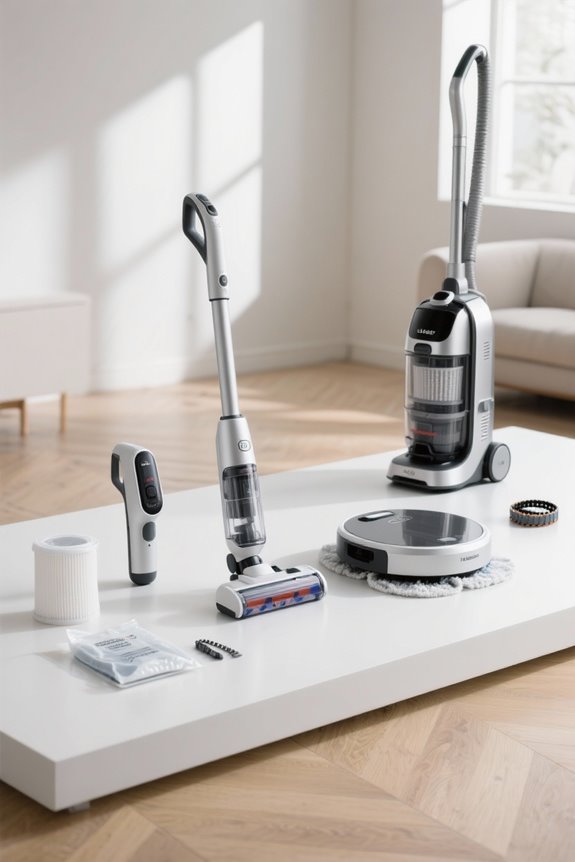
Vacuum filters should be replaced every 3 to 12 months, depending on usage, with HEPA filters needing frequent attention in homes with pets. Belts require replacement every 6 to 12 months, particularly in high-traffic areas or pet-friendly environments. Vacuum bags should be changed when two-thirds full, usually monthly, but may need more frequent changes in dust-heavy households. Maintaining these components is essential for peak performance and air quality in any home. More detailed information follows.
Key Takeaways
- Replace vacuum bags when they are two-thirds full, usually every month, or more often in homes with pets or high dust levels.
- Change vacuum belts every 6 to 12 months, with shorter intervals recommended for high-traffic households or those with pets.
- HEPA filters should be replaced every 6 to 12 months, while foam filters need washing every three months for optimal performance.
- Non-washable paper filters must be replaced when clogged, as they cannot be cleaned effectively.
- Regular filter replacement enhances suction power, improves air quality, and prolongs vacuum lifespan.
Importance of Regular Vacuum Maintenance
Regular vacuum maintenance is important for ideal performance and longevity. Timely replacement of vacuum bags, typically when they are 2/3 full, greatly enhances suction power and cleaning efficiency, preventing unnecessary motor strain. Vacuum belts, which are essential for brush roll functionality, should be replaced every 6 to 12 months, especially in homes with considerable foot traffic or pets. Additionally, changing filters, particularly HEPA filters, every 3 to 12 months is necessary for trapping allergens and improving indoor air quality, thereby benefiting allergy-prone households. Consistent maintenance not only prolongs the lifespan of the vacuum cleaner but also maintains optimal performance, ensuring thorough cleaning and minimizing the risk of costly repairs. Regular maintenance is a straightforward investment in a vacuum’s effectiveness and durability. HEPA filtration is a key feature for improved air quality in homes, making it essential for allergy sufferers and those with respiratory issues.
Vacuum Belt Replacement Schedule
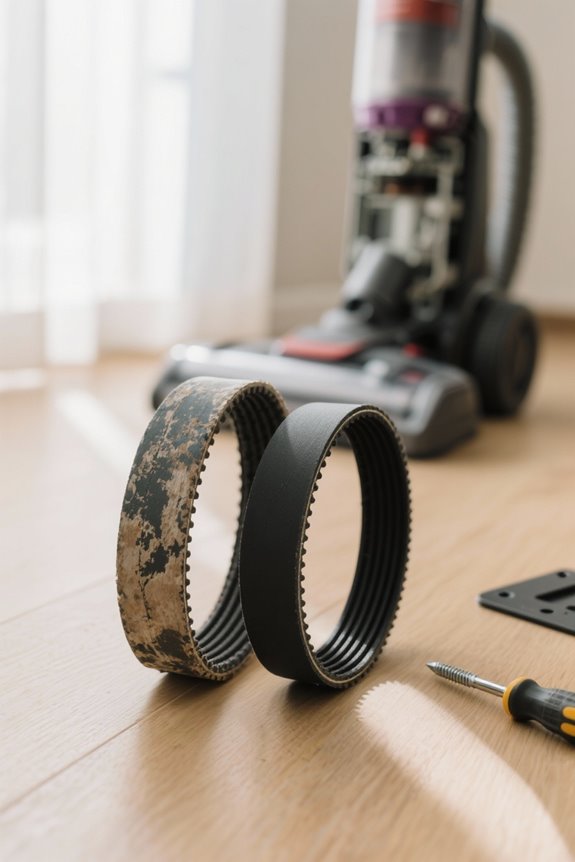
Maintaining a proper vacuum belt replacement schedule is essential for guaranteeing ideal performance. Users should replace the vacuum belt every 6 to 12 months, with households with pets advised to opt for the shorter interval. Poor pickup performance or lower suction often signals the need for a timely replacement. Signs like a non-spinning brush roll or a burning rubber smell indicate immediate action is required. Regular checks can prevent long-term damage and guarantee the motor housing operates efficiently. Neglecting the replacement schedule may lead to malfunctions or even belt melting, considerably impacting vacuum function. Timely replacements help maintain optimal performance, allowing for effective cleaning in various environments, ultimately enhancing the longevity of the vacuum cleaner. For households with allergy sufferers, ensuring HEPA filters are functioning properly is crucial to reduce allergens and improve indoor air quality.
When to Change Your Vacuum Bag
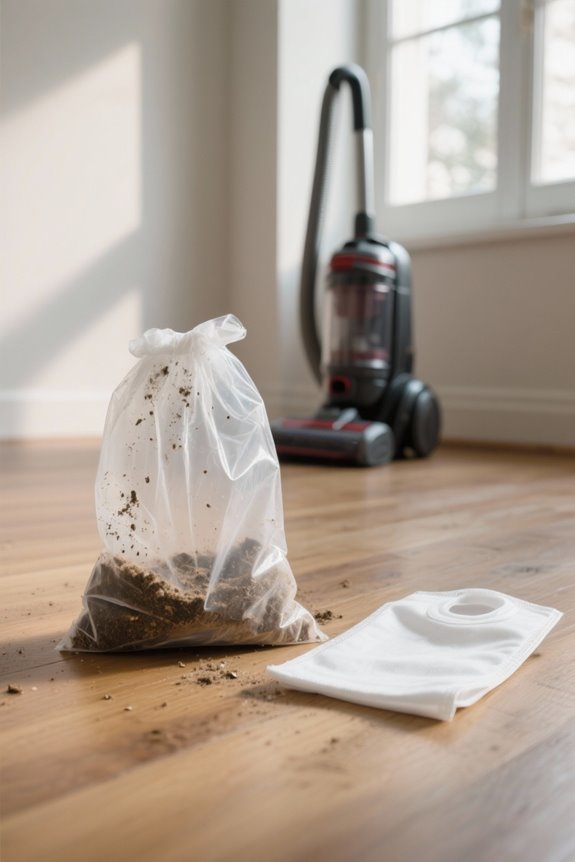
How can users determine the right time to change their vacuum bag? To maintain ideal suction and performance, it is recommended to replace your vacuum bag when it is two-thirds full, approximately once a month. For homes with pets or high dust levels, a more frequent change, every 2-3 weeks, may be necessary to avoid clogged filters and reduced efficiency. Light or occasional use can allow for longer intervals, extending to every 1-2 months based on your vacuum’s capacity. Users should look for signs such as weaker suction, a musty smell, or a noticeably heavy bag, indicating it’s time to change the vacuum bag. Timely replacements of disposable bags are essential to guarantee effective operation. It is also beneficial to consider HEPA filtration when choosing a vacuum, as it can significantly improve air quality by capturing allergens.
Benefits of Timely Filter Replacement
Timely filter replacement plays an essential role in the overall performance of a vacuum cleaner. Regular cleaning and replacement of vacuum filters guarantee ideal suction power, which is vital for maintaining effective cleaning performance. Following maintenance instructions generally suggests changing filters every 3-6 months, which helps prolong the lifespan of the vacuum. Clean filters greatly enhance indoor air quality by reducing allergens and dust particles that could be recirculated into the home. Neglecting proper filter upkeep can lead to decreased vacuum efficiency and increased energy consumption, potentially resulting in more costly repairs. In households with pets or allergy sufferers, diligence in filter maintenance is particularly important for protecting the integrity of the vacuum’s filtration system.
Recommended Products

Replacement filter for Shark NV500, NV501, NV502, NV503, NV505, NV510, NV520, NV552, UV560, NV642, ZU780, ZU782, ZU785,Compare to Part # XFF500

FIT MODELS – The AZ3002 vacuum filters are compatible with Shark Stratos DuoClean PowerFins Upright Vacuum Cleaner AZ3002 AZ3000 AZ3000W. Filter made of FSC-Certified paper.
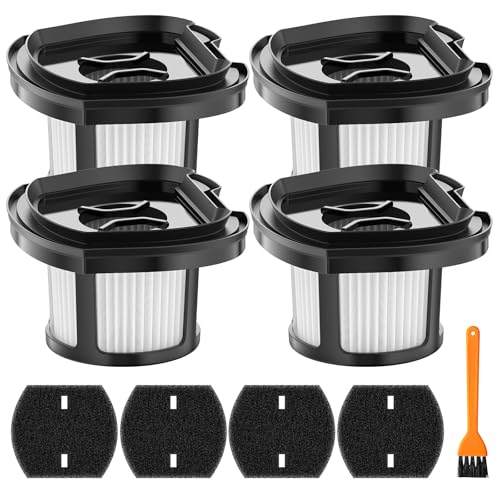
Compatible with Bissell Pet Hair Eraser Filter Hand Vacuum 2284W 2390 2389 2390A 2579 2389D 2389C 2057. Compare to Parts # 1614212 1614203 1614204.
Types of Vacuum Filters and Their Maintenance
A variety of vacuum filters exists, each designed to enhance cleaning efficiency and performance in different ways. HEPA filters are effective in removing allergens and typically require replacement every 6 to 12 months, depending on usage. Foam filters, on the other hand, should be washed every three months to maintain peak performance. Non-washable paper filters need to be replaced when clogged, as they cannot be cleaned effectively. Charcoal filters, primarily used for odor neutralization, should be replaced following the manufacturer’s recommendations to guarantee effectiveness. Regular filter replacement is essential for performance improvement and maintaining indoor air quality. Regular maintenance of these filters is vital; neglecting this can lead to reduced suction power and negatively affect indoor air quality. For detailed schedules, consulting the vacuum’s user manual is advisable.
Recommended Products

Perfect Compatibility: The Vacuum replacement filter is fit for NV500, NV501, NV502, NV503, NV505, NV510, NV520, NV552, UV560, NV642, ZU780, ZU782, ZU785, Replaces Part # Xff500 Xhf500. NOT fit for Rotator NV650 & NV750, NV755 & UV795, NV680 & NV800 series
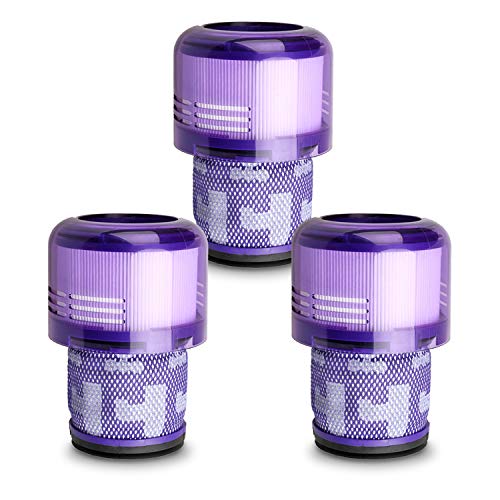
FIT MODELS – V11 V15 Filter Replacement for Dyson V11 Origin Cordless Vacuum (B00FZPRUTY, B0C2J7R8PY) V11 Animal V11 Torque Drive+ V11 Complete V11 Extra V11 Absolute V15 Detect (B0CFRH6NF2, B0CT97D9R2, B0C2J8KJH9) V15s Detect Submarine Vacuums. Compatible with Dyson filter replacement model numbers: Graded SV14, SV15, SV17, SV22, SV28, SV47. Please verify your vacuum model before purchasing to ensure a perfect fit.

This kit is designed to fits Shark Rocket Models: HV292 HV300, HV300W, HV301, HV302, HV303, HV305, HV308, HV310, UV450, UV450 26,Replaces Part# XFFV300
Signs That It’s Time to Replace Your Vacuum
Many vacuum users may overlook the signs indicating that it’s time to replace their vacuum’s components, which can greatly impact performance. Reduced suction is a key indicator that filters may be clogged, or that the vacuum bag is nearly full, necessitating replacement to maintain peak operation. Users should also note strange noises or burning smells, signaling a potentially damaged belt that requires immediate attention. Frequent clogs often highlight deeper airflow issues, suggesting that it’s time to clean or replace filters. A musty smell or visible dust leakage may point to a full vacuum bag or damaged filters. Finally, difficulty in turning on the vacuum or sudden performance drops may indicate compromised components, warranting immediate replacement. Integrated airflow control on some canister vacuums allows for seamless transitions between different surface types, helping maintain optimal performance and prolonging the vacuum’s lifespan.
Shopping for Replacement Parts and Accessories
Shopping for replacement parts and accessories plays a significant role in maintaining a vacuum’s performance and longevity. Vacuum owners can conveniently shop online at AllAboutVacuums.com for genuine OEM vacuum filters, vacuum bags, and vacuum belts. This website provides an extensive selection of premium-quality replacement parts for major brands like Miele, Riccar, and Hoover. Regular purchasing of these components helps avoid performance issues and guarantees efficient performance between scheduled maintenance. Accurate information on maintenance schedules is also available, which assists in selecting the appropriate vacuum accessories tailored to specific models. Additionally, expert assistance is accessible in-store or online, ensuring shoppers find the correct vacuum parts to enhance their cleaning equipment’s functionality and lifespan. Compact vacuum designs are particularly beneficial for those with limited storage space, as they offer powerful suction in a smaller, more maneuverable package.
Frequently Asked Questions
How Often Should Vacuum Belts Be Replaced?
Vacuum belts should typically be replaced every 6 to 12 months. Signs of wear include decreased vacuum efficiency, brush roll issues, or burning smells. Regular maintenance and DIY replacements can optimize cleaning effectiveness and reduce common issues.
How to Tell if a Vacuum Belt Needs Replacing?
To determine if a vacuum belt needs replacing, monitor belt wear, evaluate vacuum performance, and follow troubleshooting tips. Regular maintenance routines and user reviews can guide DIY replacements based on belt types and suction efficiency.
How Often Should Vacuum Filters Be Replaced?
Vacuum filters should be replaced every 3 to 12 months, depending on usage. Regular maintenance and filter cleaning techniques greatly enhance suction power, improve home cleaning efficiency, and contribute to allergen reduction strategies for healthier indoor air.
How Often Do Vacuum Bags Need to Be Replaced?
While some users argue that bagless models reduce costs, vacuum bags need replacing every month, or every 2-3 weeks for pet hair and allergens, ensuring best filtering efficiency and following essential vacuum maintenance tips.
Conclusion
In conclusion, neglecting to replace vacuum filters, belts, and bags can lead to catastrophic declines in performance, transforming a once efficient cleaning tool into an inferior, dust-laden burden. To guarantee peak cleaning power and longevity, adhering to the recommended replacement schedules is essential. Regular maintenance not only enhances suction but also prevents the untimely demise of the vacuum cleaner, preserving its status as an indispensable household ally in the ongoing battle against dirt and allergens.


