As an Amazon Associate, we earn from qualifying purchases. Some links on this site are affiliate links at no extra cost to you. Our recommendations are based on thorough research and editorial judgment.


How to Pre-Treat Sticky Stains Before Using a Vacuum + Mop Combo

To effectively pre-treat sticky stains before using a vacuum and mop combo, one should first blot the stain gently with a clean, dry cloth. Then, prepare a cleaning solution, combining vinegar and warm water, or a paste of baking soda with water for tougher residues. Apply the solution to the stain, allowing it to sit for 5-10 minutes before blotting again. This process guarantees maximum cleaning performance from the vacuum and mop combo, leading to improved results. More techniques are available to enhance clean floors.
Key Takeaways
- Identify the sticky stain and apply a vinegar and warm water mixture with a spray bottle for effective treatment.
- Allow the pre-treatment solution to sit for 5-10 minutes to dissolve the residue before cleaning.
- Use a clean, dry cloth to gently blot the stain from the outer edges inward, minimizing the spread.
- Vacuum the area thoroughly to remove debris before using the mop, ensuring clean water separation in dual-tank systems.
- Choose a suitable cleaning solution for your floor type and rinse mop pads well to avoid residue redistribution.
Understanding Sticky Stains
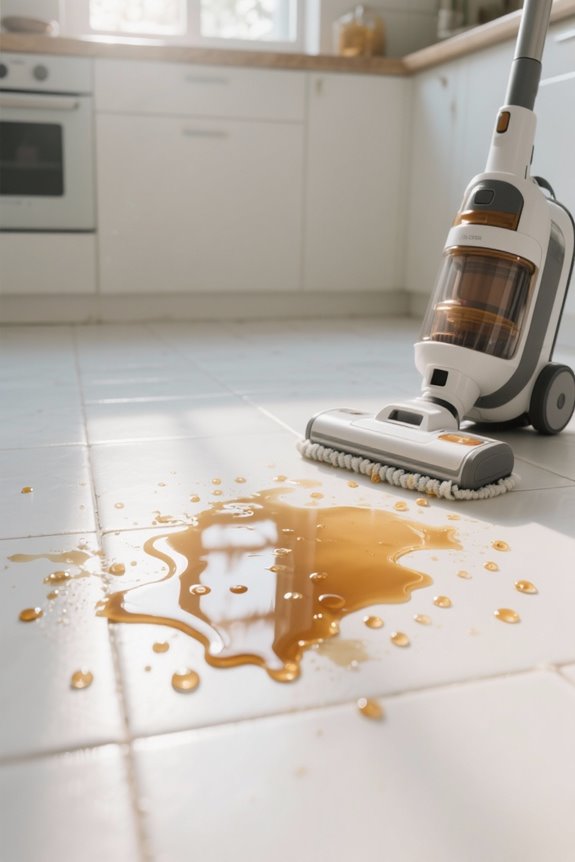
Understanding sticky stains requires a clear identification of their origins and the challenges they present. Sticky stains often arise from spills of sugary substances, grease, or oils, creating a residue that complicates cleanup. Immediate action during spill cleanup is essential, as dried substances become noticeably harder to remove. Distinguishing between sticky stains and general dirt accumulation is crucial for selecting the appropriate cleaning solution. For effective removal, a damp clean cloth paired with mild detergent or a vinegar and water solution can help pre-treat these stains, loosening the residue in preparation for further cleaning. Employing these methods enhances the cleaning process, ensuring the surface is thoroughly addressed and free from lingering stickiness, contributing to overall cleanliness and maintenance. Selecting a vacuum with a HEPA filtration system can further improve air quality by capturing allergens and dust particles during the cleaning process.
Importance of Pre-Treating Sticky Stains

Pre-treating sticky stains is essential for achieving ideal cleanliness, as it allows for the effective removal of residue before more intensive cleaning methods are employed. Addressing sticky stains promptly prevents them from setting, which can lead to damage or discoloration of floors. By utilizing cleaning solutions like vinegar mixed with water or a mild detergent, individuals can effectively cut through grease and sugar residues. Pre-treating with a damp cloth or sponge helps absorb contaminants, reducing the risk of redistributing sticky residues during vacuuming or mopping. This proactive step guarantees that the vacuum and mop work efficiently, ultimately enhancing the entire cleaning routine and decreasing the time spent on tough sticky spots, thereby yielding cleaner surfaces. When choosing a vacuum and mop combo, consider models with self-cleaning functions to further minimize maintenance efforts and enhance convenience.
Quick Blotting Technique

Addressing sticky stains effectively requires the application of the quick blotting technique, which utilizes a clean, dry cloth or paper towel to absorb the substance gently. This method involves starting from the outer edge of the stain and working inward, minimizing the risk of spreading the residue. For enhanced stain removal, the cloth may be lightly moistened with warm water, but caution is needed to avoid excess moisture that can damage certain flooring types. The blotting motion should be a gentle patting, not wiping, to guarantee maximum absorption and protect delicate surfaces. Prior to using any cleaning solution, it is wise to test it on a hidden area to ascertain it won’t damage or discolor the flooring. For optimal results, consider using specialized attachments to reach hard-to-clean areas effectively, especially in spaces like stairs where precision is key.
Preparing a Cleaning Solution
Effective stain removal often begins with the right cleaning solution. For basic sticky stains, a simple mixture of equal parts vinegar and warm water serves as an effective cleaning solution. This can be placed in a spray bottle and allowed to sit on the stain briefly. For tougher sticky stains, a paste made from baking soda and clean water can be applied directly, providing a more robust method. Prior to applying any cleaning solution, using a damp cloth absorbs excess stickiness, which helps to loosen the residue. Testing the solution on a hidden area guarantees compatibility with flooring materials, preventing potential damage. Always follow up any pre-treatment by vacuuming or using a mop and bucket to thoroughly remove remaining residue. When dealing with homes that have pets, regular cleaning frequency is crucial to maintain cleanliness and tackle stains effectively.
Applying the Cleaning Solution
To achieve a clean surface, applying the chosen cleaning solution directly to the sticky stain is vital. For effective results, one can use a vinegar and water solution or a specific floor-safe cleaner. This pre-treatment solution should be applied liberally onto the stain for ideal residue breakdown. Additionally, it is important to test the cleaning solution in a small, inconspicuous area first to prevent damage to the flooring. Once applied, a gentle scrub using a soft brush helps to lift the stain, making it easier for the vacuum and mop combo to thoroughly clean the surface. Always guarantee the area is well-ventilated, which helps eliminate fumes and maintains a comfortable cleaning environment. Many modern robot vacuums offer smartphone app control to enhance convenience in managing cleaning tasks.
Allowing the Solution to Sit
After applying the cleaning solution generously to the sticky stain, allowing it to sit for a duration of five to ten minutes is paramount. This step is significant, as it helps the solution dissolve the residue effectively, making it easier to remove during the cleaning process. The longer the solution is allowed to penetrate the stain, the more efficient it becomes at breaking down difficult substances, such as grease or sugar. It is essential to keep the solution damp while it sits, as drying out can hinder its stain-lifting capability. Before widespread application, it is wise to test the cleaning solution on a small, inconspicuous area of the floor to verify it does not cause damage to the material. For optimal results, use a multi-surface vacuum mop with a dual-tank system to ensure the separation of clean and dirty water, promoting hygiene and effective cleaning.
Gently Scraping Stubborn Residues
Gently scraping stubborn residues can greatly enhance the cleaning process, particularly on surfaces affected by sticky substances. A plastic spatula or scraper is ideal for this task, as it minimizes the risk of damaging the underlying surface. Before scraping, it’s important to test the method on a hidden area to verify compatibility with sensitive materials, such as wood or natural stone. Dampening the area with a vinegar and water solution prepares the surface, loosening residues and improving removal effectiveness. For tenacious sticky spots, allowing a pre-treatment solution to work for a few minutes can be beneficial. While gently scraping, it is vital to maintain a flat angle and use a steady motion, avoiding further penetration of the residue into the flooring. For optimal results, consider using a vacuum cleaner with robust suction power to ensure that any loosened particles are efficiently removed from the surface.
Final Preparation for Vacuum and Mop Combo
Preparing the floor before utilizing a vacuum and mop combo can greatly impact cleaning efficiency and effectiveness. Address any sticky spills promptly by blotting them with a damp cloth, as this prevents grime from adhering to the flooring. For stubborn stains, apply a mild detergent and warm water mixture directly on the affected area, allowing it to sit briefly to loosen residues. A vinegar solution helps in breaking down sticky substances; saturate the area thoroughly with one cup of vinegar mixed with a gallon of warm water before scrubbing gently. Finally, sweep or vacuum the space thoroughly to remove debris and excess dirt, ensuring no lingering particles damage the flooring type during mopping. Testing solutions on hidden areas remains essential for safeguarding surfaces. Dual-tank systems in deep clean vacuums help maintain clean and dirty water separation, which is beneficial for overall cleaning efficiency.
Tips for Effective Cleaning After Pre-Treatment
Effective cleaning after pre-treatment requires a systematic approach to guarantee ideal results. After pre-treating sticky stains, let the cleaning solution sit for 5-10 minutes, allowing it to break down the residue. Use a damp cloth to gently blot the area, lifting as much of the stain as possible without pushing it deeper. For particularly stubborn stains, a vinegar solution or mild detergent may be effective. It’s important to use vacuums that feature a HEPA filter to capture allergens and improve air quality during the cleaning process. Next, proceed with vacuuming to remove solid particles and any excess moisture, ensuring that the stain solution does not redeposit on the floor. Finally, mop using a suitable cleaning solution designed for your specific floor type to thoroughly rinse away any remaining residue, effectively preventing stickiness for a clean finish.
Maintaining Clean Floors After Treatment
Maintaining clean floors after treatment requires consistent attention to everyday spills and debris, as neglecting these tasks can lead to sticky buildup. A well-established cleaning routine will help prevent sticky stains from setting, ensuring high traffic areas stay clean. Regular cleaning through frequent vacuuming removes dirt and debris that can contribute to stickiness on hard floors. After addressing sticky stains, rinsing mop pads prevents redistributing dirt during subsequent cleanings. Using a pH-neutral cleaner specifically designed for your floor type minimizes harsh chemical residues, keeping floors cleaner longer. Implementing doormats and a no-shoes policy in the home can greatly enhance efforts to maintain clean floors, making it simpler to clean smarter and reduce overall dirt buildup. Regularly using advanced HEPA filtration vacuums can also improve indoor air quality by capturing allergens, adding an extra layer of cleanliness and health benefits to your home.
Frequently Asked Questions
How to Mop Without Leaving Sticky Residue?
To avoid sticky residue, one should employ effective mop techniques, utilize suitable cleaning solutions, and follow mopping tips. Regularly cleaning tools and practicing residue prevention will enhance floor maintenance and improve overall floor care.
What to Sprinkle on the Floor Before Vacuuming?
Before vacuuming, one can sprinkle baking soda for odor absorption, cornstarch for moisture, or even salt for cleanup. Alternatively, powdered carpet freshener scented with essential oils offers an enticing solution, enhancing cleanliness and freshness.
What Floor Cleaner Does Not Leave a Sticky Residue?
Several floor cleaner options like eco-friendly cleaners, residue-free cleaners, and DIY floor solutions such as vinegar can effectively provide a streak-free finishing. Proper application techniques and surface compatibility are essential to avoid sticky residue.
Why Is My Floor Sticky After I Mop With Swiffer?
Sticky floors after using a Swiffer may arise from mop residue issues, overused cleaning products, or improper solutions. Employing vinegar floor solutions and regular cleaning water changes, along with Swiffer alternatives, can prevent floor stickiness effectively.
Conclusion
To summarize, pre-treating sticky stains greatly boosts the effectiveness of vacuum and mop combos. Studies reveal that untreated stains can lead to lingering odors and tougher clean-up efforts later. Implementing techniques like blotting and using appropriate cleaning solutions effectively breaks down residues. This method not only guarantees improved floor sanitation but also prolongs the lifespan of flooring materials by preventing damage. Ultimately, systematic pre-treatment results in cleaner, healthier living spaces and reduces the frequency of deep cleaning.


