As an Amazon Associate, we earn from qualifying purchases. Some links on this site are affiliate links at no extra cost to you. Our recommendations are based on thorough research and editorial judgment.


How to Vacuum Stairs Safely and Effectively With a Handheld or Stick Vacuum

For safe and effective stair vacuuming, choose a lightweight cordless handheld or stick vacuum with strong suction and various attachments. Verify the battery is fully charged, preferably utilizing quick-charge technology for efficiency. Before starting, clear the area of large debris and tripping hazards. Begin at the top of the stairs, vacuuming each tread and riser systematically. Use specialized tools for corners and edges. Regular maintenance of the vacuum can optimize performance and enhance cleaning outcomes, including keeping an eye on battery health. Further insights on efficient techniques and upkeep can improve stair cleaning practices.
Key Takeaways
- Start vacuuming from the top of the stairs and work your way down to avoid pushing dirt back onto clean areas.
- Use specialized attachments, like crevice tools and brush heads, to effectively clean edges, corners, and different stair surfaces.
- Ensure the vacuum is fully charged before starting, and consider a model with quick-charge technology for extended cleaning sessions.
- Regularly empty the dust canister and clean brush rolls to maintain optimal suction power throughout your cleaning.
- Maintain a consistent cleaning schedule; vacuum stairs at least once a week to reduce allergens and improve air quality.
Choose the Right Vacuum for Stairs
When selecting a vacuum for stairs, it is essential to prioritize models that offer advantageous features suited for this specific task. To maximize maneuverability and ease of use, consumers should choose a cordless vacuum, which eliminates tripping hazards presented by cords. Strong suction power is vital, ensuring effective dirt removal from various surfaces, including carpet and hardwood. Additionally, models equipped with a variety of attachments, such as crevice tools and brush heads, can help efficiently clean corners and different materials. Lightweight vacuums are preferable, as they minimize physical strain during prolonged cleaning sessions. Overall, selecting a vacuum that combines these attributes will contribute considerably to the effectiveness of cleaning stairs while reducing the effort involved. For optimal air quality enhancement, consider vacuums with HEPA filtration systems that capture a high percentage of dust particles.
Ensure Your Battery Is Charged

Charging the vacuum’s battery to full capacity is essential for achieving ideal cleaning performance on stairs. A fully charged battery allows for uninterrupted cleaning, maximizing runtime during use. Quick-charge technology enables users to recharge a handheld vacuum’s battery in as little as 30 minutes, perfect for last-minute cleaning sessions. Having an additional battery on hand can further extend vacuuming time, particularly in larger areas. Some competing vacuums may require up to 2.5 hours for a complete recharge, highlighting the significance of preparation. Regularly checking the battery’s health is also important, as older batteries may not hold a charge effectively. Overall, maintaining a charged battery is fundamental for efficiently accomplishing cleaning tasks without interruptions. High suction power is also crucial for effective removal of dirt and debris, ensuring that cleaning performance matches the battery’s runtime.
Recommended Products
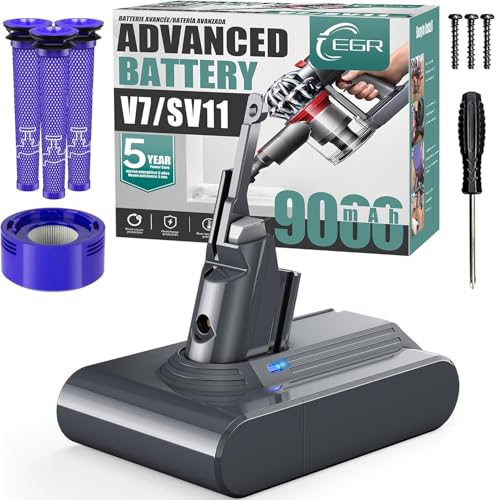
【Long Battery Life of V7 Rechargeable Battery】9000mAh rechargeable V7 animal battery replacement is designed to provide more power. V7 battery replacement provides more than 35 minutes in the normal mode, 9 minutes in high-performance mode, longer runtime than OEM batteries.(Note: Please cool down the battery before charging)

【Great V8 Replacement Battery】Compatible with Dyson V8 original SV10 967834-05 215681 battery is compatible with Dyson V8 series vacuum cleaners; Use international high-quality battery cells; Upgraded 4500 mAh 21.6V lithium battery provides longer life than the original battery to clean your house fully
Clear the Path Before Vacuuming
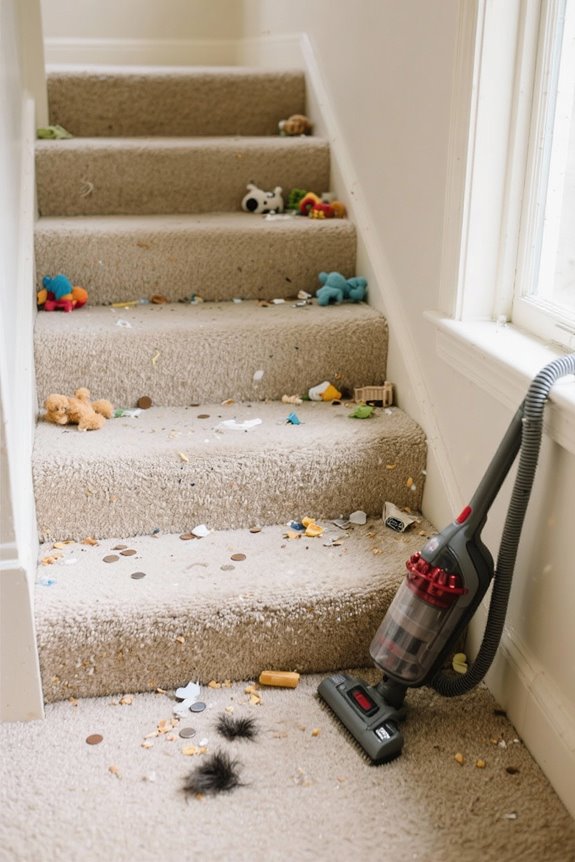
Clearing the path before vacuuming stairs is essential for achieving effective results and maintaining safety. It is important to conduct a visual inspection to identify and remove any large debris, stray wrappers, or small objects that may obstruct the vacuuming process. By ensuring clear pathways, one reduces tripping hazards, enabling a more efficient and uninterrupted cleaning session. Additionally, dusting banisters, skirting, and other surfaces prior to vacuuming helps eliminate extra dust that can fall onto freshly cleaned areas. Keeping a designated spot for cleaning tools nearby streamlines the preparation process, allowing for quick access to necessary equipment. Properly organizing the space enhances the effectiveness of the cleaning session, allowing for easier maneuvering and complete coverage of all areas. Consider using a vacuum with advanced HEPA filtration to capture allergens and improve indoor air quality while cleaning the stairs.
Maintain a Clean Vacuum for Optimal Performance
Maintaining a clean vacuum is essential for ideal performance, especially when tasked with vacuuming stairs. Regular maintenance guarantees strong suction and effective dirt removal. Users should empty the dust canister after each use or when it reaches the full indicator. This action prevents any clogging that might hinder performance. Additionally, cleaning the brush rolls by removing hair and debris helps maintain high-quality functionality. Monitoring the HEPA filter is critical, as a dirty filter can compromise allergen control; washing or replacing it as recommended is advisable. For cordless vacuums, it is important to check battery performance regularly, guaranteeing a full charge for uninterrupted cleaning sessions. Regular upkeep is essential for peak performance and extends the lifespan of the vacuum. Finally, using disinfecting wipes on the vacuum’s exterior helps keep it clean and hygienic.
Start Vacuuming From the Top of the Stairs
Starting the vacuuming process at the top of the stairs is a practical approach that enhances overall cleaning efficiency. This technique guarantees dirt or debris does not fall onto freshly cleaned areas as one descends, facilitating an effective cleaning routine. By beginning at the uppermost step, any dust or allergens disturbed during vacuuming can settle downward, improving the effectiveness of subsequent cleaning. In addition, vacuuming in a downward direction directs debris toward the vacuum, making collection easier and reducing the chances of missing spots on carpeted surfaces. This method is particularly beneficial for high-traffic homes, as it promotes better stair hygiene over time, minimizing dust buildup and contributing to a cleaner living environment by enhancing overall cleaning performance. Utilizing a vacuum with powerful suction, such as the Shark Rocket HV301, ensures effective removal of dirt and allergens, providing cleaner and healthier stairs.
Utilize Appropriate Vacuum Attachments
Effective vacuuming of stairs relies heavily on the use of appropriate vacuum attachments, which can greatly enhance cleaning performance. The crevice tool is essential for reaching the edges and corners of stairs, capturing hidden dust and debris that standard heads might miss. For carpeted stairs, a brush tool effectively lifts dirt and pet hair, providing a deeper clean. Using specialized attachments designed for wider surfaces can help cover more area in less time, improving overall efficiency. Additionally, switching to a suitable attachment for vertical surfaces, like risers, guarantees thorough cleaning during the vacuuming process. It is important to ascertain that attachments are compatible with the stairs’ materials, such as carpet, wood, or tile, to optimize cleaning results and prevent damage. Utilizing vacuums equipped with HEPA filters can significantly improve allergen control, ensuring that particles are captured effectively while vacuuming stairs.
Follow an Efficient Vacuuming Pattern
An efficient vacuuming pattern is essential for achieving a thorough clean when tackling stairs. To start, begin at the top step and carefully work downward, preventing dirt from falling onto already cleaned areas. This systematic approach helps make sure no spots or dust are missed. Initially, utilize a slim attachment or crevice tool to target corners and edges, particularly in homes with pets where debris accumulates frequently. As the vacuuming progresses downward, switch to a wider attachment to cover more surface area on the treads. Additionally, don’t overlook the risers, as dirt can easily settle on these vertical surfaces. Following this structured pattern guarantees extensive cleaning, maintaining a tidy and fresh stair environment. Consider using vacuums with high-quality HEPA filters to capture up to 99.97% of particles and ensure cleaner air quality in your home.
Focus on Corners and Edges
Corners and edges are often overlooked during stair cleaning, yet they serve as crucial repositories for dust and debris. Using a handheld vacuum equipped with a crevice tool is essential for targeting these areas effectively. This approach allows for meticulous cleaning of corners, where dust and pet hair tend to accumulate. It is advisable to move slowly in these areas to guarantee that the suction fully engages with the debris. Additionally, the edges of risers and treads should not be neglected, as they can greatly affect overall stair cleanliness. Regularly focusing on corners and edges contributes to a polished look and helps maintain the hygiene of the stairs, making the use of a handheld vacuum a wise choice in these tight spaces. In 2026, handheld mini vacuum models are especially beneficial for their compact size and integrated LED lights, allowing for effective cleaning in tight and dark spaces.
Vacuum Each Tread Thoroughly
Vacuuming each tread thoroughly is crucial for maintaining clean and hygienic stairs. Begin by using a vacuum cleaner or carpet cleaner, starting at the back of each tread and moving to the front. This method prevents dirt from being pushed onto previously cleaned areas. Employ a brush attachment to agitate the carpet fibers, allowing for deeper dirt removal without damaging the surface. Move the vacuum slowly and methodically, overlapping slightly with each pass to guarantee thorough coverage. Special attention should be paid to the edges and corners of each tread, utilizing a crevice tool to address hidden dust and debris. Regularly check the vacuum bag or dust canister, emptying it to maintain peak suction power during the cleaning process. For optimal cleaning results on stairs, consider using a model with adjustable suction settings to tailor the cleaning power according to the surface type, ensuring efficient dirt removal and energy conservation.
Tackle Risers and Vertical Surfaces
Ignoring the risers and vertical surfaces while vacuuming can lead to a noticeable accumulation of dust and grime. To effectively tackle risers, a handheld vacuum equipped with a brush attachment is ideal. This tool allows users to maneuver easily around edges and corners, lifting dirt from vertical surfaces where dust often settles. Additionally, regular cleaning of these areas is essential for preventing allergen buildup, especially in homes with allergy sufferers or pets. To maintain a thorough cleaning process, a systematic approach is recommended; vacuuming the risers as one descends the stairs guarantees that no spots are missed. By incorporating this practice into a cleaning routine, individuals can achieve a healthier living environment and prolong the cleanliness of their staircases. When choosing a handheld vacuum for stairs, consider models with HEPA filtration to ensure effective removal of fine particles and allergens.
Tips for Addressing Hard-to-Reach Areas
How can one effectively manage the challenges of cleaning hard-to-reach areas on stairs? Utilizing specialized attachments, such as crevice tools and dusting brushes, proves essential for accessing tight corners and deep spaces, guaranteeing a thorough clean. A cordless stick vacuum enhances maneuverability, allowing users to clean each step without straining. Incorporating flexible extension hoses enables reaching under railings and into crevices, effectively maintaining cleanliness in enclosed areas. Regularly using smaller brush tools or handheld vacuums can help address dust buildup in rarely used sections. Adopting a methodical cleaning pattern guarantees extensive cleaning of hard-to-reach areas, which enhances overall safety and prevents missed spots, greatly improving the efficiency of vacuum cleaners during stair cleaning tasks.
Regular Maintenance for Stair Cleanliness
Maintaining stair cleanliness requires a consistent approach that keeps the area free from dirt and allergens. Regular vacuuming, at least once a week, is essential for effective stair cleaning, as it helps prevent the accumulation of dust and dirt. Employing a handheld or stick vacuum designed for stairs allows for an efficient cleaning process, particularly on carpeted surfaces. The use of specialized attachments, like crevice tools, guarantees that corners and edges are thoroughly cleaned, eliminating hidden debris. Additionally, establishing a routine to inspect stair materials for wear and tear is important, as it keeps the stairs safe and aesthetically pleasing. Regular cleaning not only enhances air quality but also reduces allergens that can affect respiratory health.
Frequently Asked Questions
Do Stick Vacuums Work on Stairs?
Stick vacuums effectively clean stairs thanks to their lightweight design and specialized features. Stair cleaning techniques benefit from their maneuverability, while vacuum weight considerations and handheld vacuum benefits enhance safety and ease during the cleaning process.
What Is the Best Vacuum for Doing Stairs?
When comparing handheld vs. stick vacuums for stairs, lightweight models offer cordless convenience, while suction power is critical. Stair vacuum features, such as specialized attachments, enhance effectiveness, making the choice dependent on individual cleaning needs.
How to Vacuum Stairs Safely?
To vacuum stairs safely, one should follow stair vacuuming tips by ensuring a clear path, using ergonomic considerations, employing proper cleaning techniques, avoiding common mistakes, and taking safety precautions such as having a partner nearby for support.
What Attachment Should I Use to Vacuum Stairs?
Choosing the right attachment can transform stair vacuuming. A crevice tool tackles corners, while a brush attachment lifts grime from carpets. Stick vacuum features add versatility. Proper vacuum attachments comparison reveals the best stair cleaning techniques for ideal results.
Conclusion
In summary, effectively vacuuming stairs requires careful preparation and technique to guarantee cleanliness and safety. Selecting a suitable vacuum, keeping it maintained, and systematically addressing each surface are essential strategies. The importance of a charged battery, along with clearing obstacles, enhances performance and efficiency. Regular maintenance not only improves cleanliness but can also extend the lifespan of the vacuum. By following these guidelines, maintaining stairs can become a manageable task, promoting a consistently clean living environment.


