As an Amazon Associate, we earn from qualifying purchases. Some links on this site are affiliate links at no extra cost to you. Our recommendations are based on thorough research and editorial judgment.


Vacuuming Vs Sweeping: Which Is Better for People With Allergies?

Vacuuming is superior to sweeping for individuals with allergies. Vacuums equipped with HEPA filters capture up to 99.97% of airborne allergens, including dust mites and pet dander. Sweeping, on the other hand, disperses dust and allergens back into the air, worsening symptoms. Regular vacuuming two to three times a week considerably reduces allergen levels and improves indoor air quality. Incorporating specific strategies can further enhance this effect, leading to more effective allergy management at home. More insights on optimizing this process are available.
Key Takeaways
- Vacuuming with HEPA filters captures 99.97% of airborne allergens, significantly reducing re-exposure in allergy-prone individuals.
- Sweeping stirs up dust and allergens, worsening allergy symptoms and offering ineffective management for fine particles.
- Regular vacuuming (2-3 times a week) decreases allergen accumulation better than frequent sweeping.
- Specialized vacuum attachments can clean various surfaces, enhancing overall allergen removal capabilities.
- Changing vacuum filters and using allergen-resistant covers further improve indoor air quality for allergy sufferers.
Understanding Allergens in Your Home
Understanding the presence of allergens in a home is vital for managing allergy symptoms. Common indoor allergens such as dust mites, pet dander, and mold spores greatly affect indoor air quality. Dust mites alone impact around eight out of ten individuals in the U.S. These allergens often reside in soft surfaces like carpets, upholstery, and non-washable bedding, making effective cleaning practices important. Utilizing HEPA filters**** in vacuums helps capture smaller airborne particles, thereby reducing allergens greatly. Regular thorough vacuuming and washing bedding weekly can lower allergen levels effectively. Maintaining a clean environment requires consistent efforts, as indoor surfaces typically harbor more allergens than the air itself, necessitating proper management to alleviate allergic reactions and enhance overall indoor air quality.
The Limitations of Sweeping
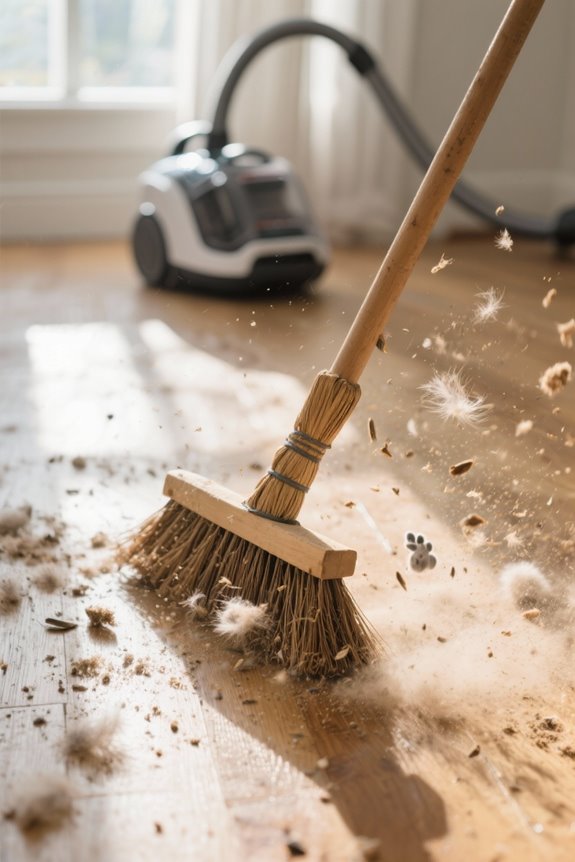
Many individuals underestimate the limitations of sweeping when it comes to managing allergens in their homes. Sweeping often stirs up dust and allergens into the air, making them airborne and increasing the likelihood of inhaling these irritants. Traditional brooms struggle with fine dust particles, allowing allergens like pet hair and pollen to linger. This redistribution of allergens can worsen allergy symptoms, particularly during peak pollen seasons or in homes with pets. Furthermore, when severe allergies are a concern, sweeping may not be an adequate cleaning routine, as it cannot effectively capture smaller allergens that a vacuum can. While sweeping is a quick method, it may necessitate more frequent efforts, ultimately leading to less efficient management of allergens compared to vacuuming. HEPA filters capture microscopic allergens, making vacuums with advanced filtration systems a more effective option for improving air quality and reducing allergy symptoms.
The Advantages of Vacuuming

While sweeping has its place in home cleaning, vacuuming offers considerable advantages for managing allergies. Vacuuming equipped with high-efficiency particulate air (HEPA) filters captures up to 99.97% of airborne particles, including dust mites, pet dander, and pollen. This capability considerably improves air quality, particularly for allergy sufferers. Regular vacuuming, performed two to three times weekly during allergy season, effectively reduces allergens in the home. Unlike sweeping, which stirs allergens into the air, vacuuming collects and contains them, minimizing re-exposure. A vacuum designed for allergy management, featuring strong suction power and dust-free emptying, further enhances allergen removal. Through this efficient cleaning method, homes become healthier spaces for individuals sensitive to dust and other allergens common in environments with pets. Many allergen vacuum cleaners have specialized attachments, such as the Shark NV352’s lift-away function, which enhances their versatility in cleaning various surfaces.
Key Tips for Allergy Relief at Home
Creating an allergy-friendly home environment requires implementing several key strategies that effectively reduce airborne irritants. Regular vacuuming, especially with HEPA-filter vacuums, can capture 99.97% of dust and allergens, improving air quality. It is advisable to vacuum 2–3 times a week, focusing on high-traffic areas to minimize allergen accumulation. Changing vacuum and HVAC filters frequently enhances performance and helps prevent allergens in your home from re-entering. Additionally, washing bedding and stuffed toys weekly in hot water contributes to reducing allergy symptoms. Employing allergen-resistant covers on pillows and mattresses offers extra protection against common indoor allergens like dust mites and pet dander, creating a more clean and comfortable living environment for allergy sufferers. Choosing a vacuum with multi-cyclonic suction technology ensures consistent suction power, which is essential for effectively lifting allergens from various surfaces.
When to Seek Professional Cleaning Services
When is it prudent to contemplate professional cleaning services for allergy management? Individuals should consider these services during peak allergy seasons, particularly when allergens like pollen are prevalent. Regular home cleaning may not be sufficient for deep cleaning high-allergen zones, such as bedrooms and pet areas. Deep cleaning experts utilize High-Efficiency Particulate Air (HEPA) vacuums, which are designed to capture dust mites, pet dander, and mold spores. Investing in a quality vacuum, particularly those with HEPA filtration systems, can significantly improve indoor air quality. This advanced equipment leads to noticeable improvements in indoor air quality and a reduction in allergy symptoms. Additionally, scheduling ongoing support from professional cleaning services guarantees that spaces remain allergen-free, facilitating a healthier living environment for those with severe allergies or asthma.
Advanced Cleaning Tools and Technologies
A variety of advanced cleaning tools and technologies are available to assist allergy sufferers in maintaining a cleaner indoor environment. Many robot vacuums feature HEPA filters, designed to capture 99.97% of airborne allergens, enhancing their cleaning power notably. Smart vacuum models, such as the Dreame H14, automatically adjust suction based on floor conditions, optimizing allergen removal while minimizing noise. Additionally, robot vacuum mops combine vacuuming and mopping functions, effectively tackling both dust and spills, which is beneficial in allergy-prone areas. Self-emptying vacuums reduce the frequency of dustbin emptying, which is convenient for busy households and pet owners. Regular maintenance of advanced vacuum tools, like cleaning filters and dust bins, improves their efficient trapping of allergens, including pet hair and pollen, surpassing the capabilities of traditional sweeping methods. These technologies represent a substantial advancement in indoor air quality management.
Managing Humidity and Indoor Quality
Indoor humidity management plays an essential role in maintaining a healthy indoor environment for allergy sufferers. Keeping indoor humidity levels below 50% is critical, as it greatly deters mold and dust mite growth, two prevalent allergens. Utilizing dehumidifiers can effectively control moisture levels, lowering the presence of allergens linked to damp conditions. Regularly ventilating indoor areas by opening windows and using exhaust fans enhances air quality by facilitating fresh air circulation, which diminishes airborne allergens. High humidity levels can aggravate allergic reactions, making it important to manage moisture in places like kitchens and bathrooms. Additionally, changing HVAC filters frequently and using HEPA air purifiers can improve indoor air quality by trapping allergens and optimizing air circulation within the space. Using water filtration vacuums can further enhance air quality by removing 99.9% of allergens from indoor environments.
Community Resources for Allergy Support
Community resources play an essential role in supporting individuals affected by allergies. The Asthma and Allergy Foundation of America (AAFA) provides guidelines for managing allergens and enhancing indoor air quality. Community support groups and online forums allow individuals to share experiences and effective strategies for allergy management. The American College of Allergy, Asthma & Immunology (ACAA) offers educational materials and a directory to find local specialists for allergy testing and treatment. Additionally, local health departments organize workshops and seminars focusing on indoor air quality and allergen management. These initiatives raise awareness and provide practical tips. Certified asthma and allergy-friendly products endorsed by the AAFA can also be found through community partnerships, aiding households in achieving healthier environments conducive to allergy sufferers. Incorporating HEPA filtration into household cleaning routines is a key strategy for significantly improving air quality and reducing allergens in homes.
Frequently Asked Questions
Is Sweeping Better Than Vacuuming for Allergies?
Sweeping techniques often disturb dust particles and allergy triggers, worsening air quality. Conversely, vacuuming efficiency with suitable broom materials and HEPA filters captures indoor allergens, suggesting that vacuuming should be prioritized in cleaning frequency for better results.
Is Vacuuming Bad for Allergies?
Vacuuming isn’t bad for allergies; in fact, it can be a potent ally. Effective vacuum features trap dust particles, including pet dander, enhancing air quality. Proper filtration systems provide essential allergy relief when applied with strategic cleaning techniques.
Does Vacuuming Carpet Help With Allergies?
Vacuuming carpet effectively aids in allergen removal, trapping dust mites, pet dander, and other allergy triggers within carpet fibers. Utilizing a vacuum cleaner with a HEPA filter enhances indoor air quality through thorough carpet cleaning and deep cleaning practices.
How Do You Clean Your House if You Have Allergies?
To maintain an allergy-friendly cleaning routine, he employed hypoallergenic products, implemented a weekly cleaning schedule, utilized effective dusting methods, and practiced air purification techniques, ensuring dust mite management and a consistently allergen-free environment throughout the home.
Conclusion
In the battle against allergens, vacuums emerge as key allies, capturing dust and allergens in their depths, while brooms merely stir them into the air. For those with allergies, the choice becomes clear when considering efficiency in removing debris. Coupled with humidity management and advanced cleaning tools, a well-rounded strategy enhances indoor air quality. Ultimately, understanding these factors can offer relief, providing a healthier environment and fostering well-being for individuals sensitive to allergens.


