As an Amazon Associate, we earn from qualifying purchases. Some links on this site are affiliate links at no extra cost to you. Our recommendations are based on thorough research and editorial judgment.


What Is a HEPA Filter and Why It Matters in Your Vacuum Cleaner

A HEPA filter, or High Efficiency Particulate Air filter, is critical in vacuum cleaners for capturing at least 99.97% of particles as small as 0.3 microns. Constructed from tightly woven fibers, it effectively traps allergens like dust, pollen, and pet dander. This filter enhances indoor air quality and provides health benefits, particularly for those with respiratory issues. Regular replacement and proper maintenance are essential for peak performance. Further insights can help users select the best vacuum with HEPA filtration features.
Key Takeaways
- A HEPA filter captures at least 99.97% of particles as small as 0.3 microns, improving air quality.
- It reduces allergens like dust, pollen, and pet dander, benefiting asthma and allergy sufferers.
- HEPA filters use advanced mechanisms like interception and impaction to effectively trap microscopic particles.
- Regular maintenance and timely replacements are crucial for maintaining HEPA filter effectiveness in vacuums.
- Choosing vacuums with sealed HEPA systems ensures that allergens do not escape back into the air.
What Is a HEPA Filter?
A HEPA filter, which stands for High Efficiency Particulate Air filter, is an essential component in many vacuum cleaners aimed at enhancing indoor air quality. This filter is designed to capture at least 99.97% of particles that are 0.3 microns in size, such as allergens like dust mites, pollen, and pet dander. The construction of a HEPA filter features tightly woven fibers arranged in a pleated pattern, which increases the surface area for effective particle capture. Unlike standard filters that may allow smaller particles to escape, HEPA filters provide superior filtration performance. This makes them especially important for individuals suffering from allergies or respiratory issues, as they profoundly improve the air quality within homes by effectively trapping various indoor pollutants. Additionally, models like the BSRCO Handheld Vacuum Cordless Rechargeable include a washable HEPA filter, which simplifies maintenance while ensuring continued excellent air quality.
Recommended Products
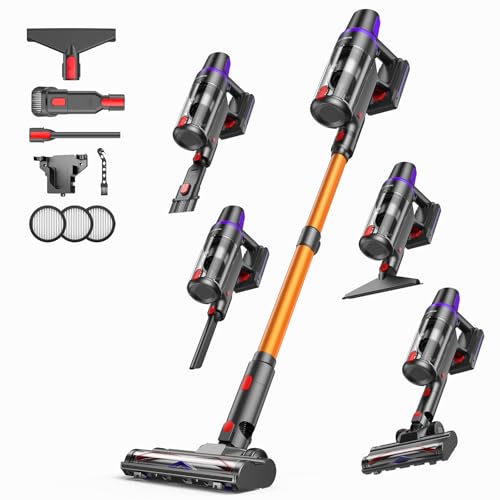
[3 Power Modes & 60-Min Runtime] This cordless handheld vacuum is equipped with a high-capacity battery that delivers up to 60 minutes of continuous cleaning in energy-saving mode. Choose from three power settings to adapt to different surfaces and tasks around your home. For added convenience, the battery can be removed for standalone charging, or you can use the included charging base for automatic power-ups and tidy storage

DuoClean PowerFins Technology: Two brushrolls—PowerFin and soft roller—provide nonstop contact on carpet and hard floors for deeper cleaning and more debris pickup in every pass (vs. original DuoClean).

【550W High-Power Motor & 45kPa Strong Suction】 Powered by a 550W motor, this cordless vacuum delivers up to 45,000Pa of suction for efficient, deep cleaning. Effectively lifts embedded dirt, fine dust, and stubborn pet hair from hardwood, carpet, and tile floors. Lightweight and tangle-free, it’s an ideal choice for daily maintenance in family homes, apartments, and pet-friendly households.
How Does a HEPA Filter Work?

HEPA filters utilize a combination of mechanisms to effectively trap microscopic particles and enhance air quality. These High Efficiency Particulate Air filters employ interception, impaction, and diffusion to efficiently capture particulates. Particles as small as 0.3 microns, including dust mites, pollen, and pet dander, are trapped with at least 99.97% efficiency. The filter consists of tightly woven fibers that create a large surface area, outperforming standard filtration systems in capturing small particles. To improve indoor air quality, it is essential for the vacuum cleaner to be properly sealed, preventing air leaks. Regular maintenance, including timely filter replacements, is vital, as clogged HEPA filters can diminish suction and overall effectiveness, impacting their ability to assist allergy sufferers effectively. HEPA filtration is a key feature for improved air quality in homes, making it crucial for reducing allergens like pollen and pet dander.
Recommended Products

COMPATIBILITY: These HEPA media filter replacement kit are compatible with Kenmore Canister and Upright Vacuum Cleaner #86889, 20-86889, 53295, 40324, for Panasonic Upright Vacuum Cleaner MC-V199H, MC-UG725, MC-UG727, MC-UG729, MC-GG525, MC-CG983

POWERFUL SUCTION FOR CARPET & HARD FLOORS: Clean carpets and hardwood floors with strong multi-surface suction. This lightweight upright vacuum cleaner lifts dirt, debris, and pet hair for a complete home clean.
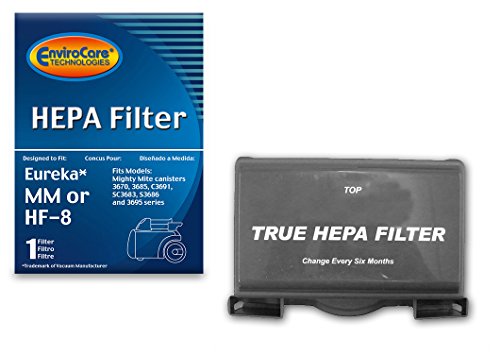
EnviroCare Replacement HEPA Vacuum Cleaner Filter Designed to Fit Eureka Sanitaire HF-8 MM Mighty Mite Pet Lover, Sanitaire Commercial Canister Vacuum Cleaners, 60666B, 60666A, 60666-6, EUR 60295-6
Health Benefits of Using a HEPA Filter Vacuum

How can using a vacuum cleaner equipped with a HEPA filter impact health in a household? A HEPA filter vacuum markedly reduces allergens like dust particles, pollen, and pet dander, effectively trapping at least 99.97% of particles down to 0.3 microns. This level of HEPA filtration aids individuals with respiratory issues, including asthma and allergies, by improving indoor air quality and decreasing airborne irritants. Regular vacuuming with a HEPA filter leads to a cleaner living space, as it also removes bacteria and mold spores. Studies indicate that homes utilizing HEPA filter vacuums experience fewer allergy symptoms and respiratory problems than those with standard filtration, making these vacuums a valuable investment for health-conscious households. Many modern vacuums, such as the Shark Navigator, include HEPA filters and additional features like Anti-Allergen Complete Seal Technology to further enhance air quality.
When Should You Replace a HEPA Filter?
Maintaining ideal air quality and vacuum performance requires attention to when filters are replaced. HEPA filters should typically be replaced every six to twelve months to guarantee peak performance and allergen capture. In dusty environments or homes with pets, replacement may be necessary more frequently to effectively minimize allergens. Indicators that a HEPA filter needs to be replaced include reduced suction power, unusual odors emanating from the vacuum, and visible dust buildup on the filter. Regular maintenance, which involves checking and replacing filters, is essential for sustaining the vacuum’s efficiency and its ability to capture harmful particles. Neglecting to replace a HEPA filter can lead to decreased filtration efficiency, allowing allergens and dust to recirculate in the indoor air. Selecting a vacuum with anti-allergen complete seal technology enhances filtration effectiveness and ensures optimal indoor air quality.
Recommended Products
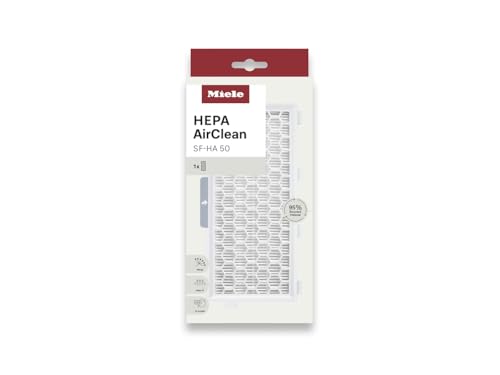
Use: Miele's SF-HA 50 HEPA AirClean Filter is compatible with Miele Guard M1 and L1, Complete C2 and C3, Compact C1 and C2 vacuum cleaners

Perfect Compatible with Shark Navigator Lift Away Models: NV350_26, NV350A_26, NV350E, NV350Q, NV350T, NV350W, NV350W_N, NV350WC, NV351, NV351C, NV351WM1, NV351WM2, NV352, NV352C, NV352CFS, NV352E, NV352Q, NV354C, NV355, NV355-26, NV355C, NV355CFS, nv356E, NV356K, NV356Q, NV357, NV358, NV358BRN, NV360, NV367, NV360K, NV361BK, NV361PR, NV370, NV370_26, NV380, NV391, NV391C, UV440, UV440CCO, UV440CCOFS, UV490CCO, UV500WM, UV540, UV540CCO, UV541CCO, UV550, ZU503AMZ, CU500/CU512 series, Compare to Part # Xff350 & # Xhf350.
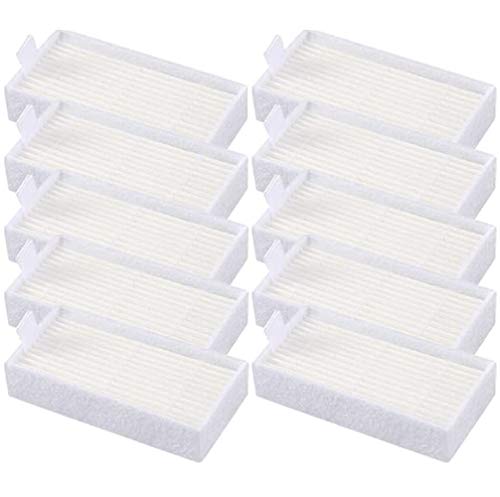
Hepa filters for Ilife Vacuum model V3, V3s V3s pro V5 V5s V5s Pro Vacuum Cleaning Robot. Ilife Filter Replacement.
Choosing the Right Vacuum With HEPA Filtration
When evaluating a vacuum with HEPA filtration, consumers should focus on several vital features that enhance allergen capture and overall performance. First, opt for vacuums that utilize genuine HEPA Filters, capable of capturing at least 99.97% of fine particles down to 0.3 microns. Additionally, models with sealed HEPA systems prevent allergens from escaping back into the environment. The vacuum’s design is also significant, as high-quality designs often include strong suction power and multiple cleaning tools for efficient dust trapping on various surfaces. Finally, consumers should consider the filter replacement frequency to guarantee peak performance over time. Evaluating these attributes helps to identify a vacuum that effectively captures allergens like dust mites and pet dander, promoting cleaner indoor air quality. For optimal results, look for vacuum cleaners that also incorporate UV-C light technology, which effectively kills dust mites during use.
Recommended Products

Smart Allergen Sensor & Visualized Cleaning —— More than just basic dust sensing, our upgraded smart sensor is engineered to detect microscopic particles and allergen concentrations in real-time. The LED indicator switches colors (Blue/Orange/Red) to reflect the hidden pollutants on your fabric, ensuring you know exactly when the surface is truly clean

16KPa Powerful Suction Engineered for Pet Owners — Driven by a heavy-duty motor, the impressive 16KPa hurricane suction effortlessly captures stubborn pet hair, loose fur, and embedded dander without tangling or clogging. Specially built for pet-owning households, it thoroughly lifts deep-seated fur from bed sheets, couches, pet beds, and cushions, restoring a hair-free living space

POWERFUL SUCTION: Equipped with a 400W motor to pull stubborn dirt and invisible debris from deep within fabrics
Frequently Asked Questions
Do You Really Need a HEPA Filter on a Vacuum?
A HEPA filter is essential for enhancing vacuum performance by providing superior filtration efficiency, supporting allergy reduction through effective dust containment, improving cleaner air quality, and offering health implications that outweigh maintenance frequency, noise levels, and cost analysis.
What Are the Two Disadvantages of HEPA Filters?
HEPA filter drawbacks include high replacement frequency, leading to increased maintenance challenges and cost concerns. Additionally, when dirty, they may cause airflow restriction, reducing filtration efficiency and potentially increasing noise levels during operation.
Can I Use My Vacuum Without the HEPA Filter?
Using a vacuum without a HEPA filter diminishes vacuum efficiency and air quality, leading to poor dust containment and exacerbating allergy relief efforts. Proper filter maintenance and timely filter replacement are essential for ideal cleaning performance and health benefits.
Why Use a Vacuum With a HEPA Filter?
Using a vacuum with a HEPA filter enhances air quality and vacuum efficiency, providing allergy relief and asthma prevention. It effectively controls dust, captures pet hair, and maintains clean air through superior filtration technology and regular filter maintenance.
Conclusion
In conclusion, a HEPA filter enhances vacuum performance by capturing 99.97% of particles as small as 0.3 microns, promoting cleaner living environments. Some may argue that these filters require frequent replacements and maintenance, leading to added costs. However, investing in a vacuum with a HEPA filter ultimately reduces allergens, improves air quality, and contributes to overall health. As a result, the benefits of cleaner air and enhanced filtration capabilities usually outweigh the potential inconveniences associated with maintenance.


